Ahimsa : Hadappa Sabhyta Par 100 Manan
Author: Pattanaik, Devdutt
Brand: HarperCollins Children's Books
Binding: Paperback
Number Of Pages: 264
Release Date: 05-11-2025
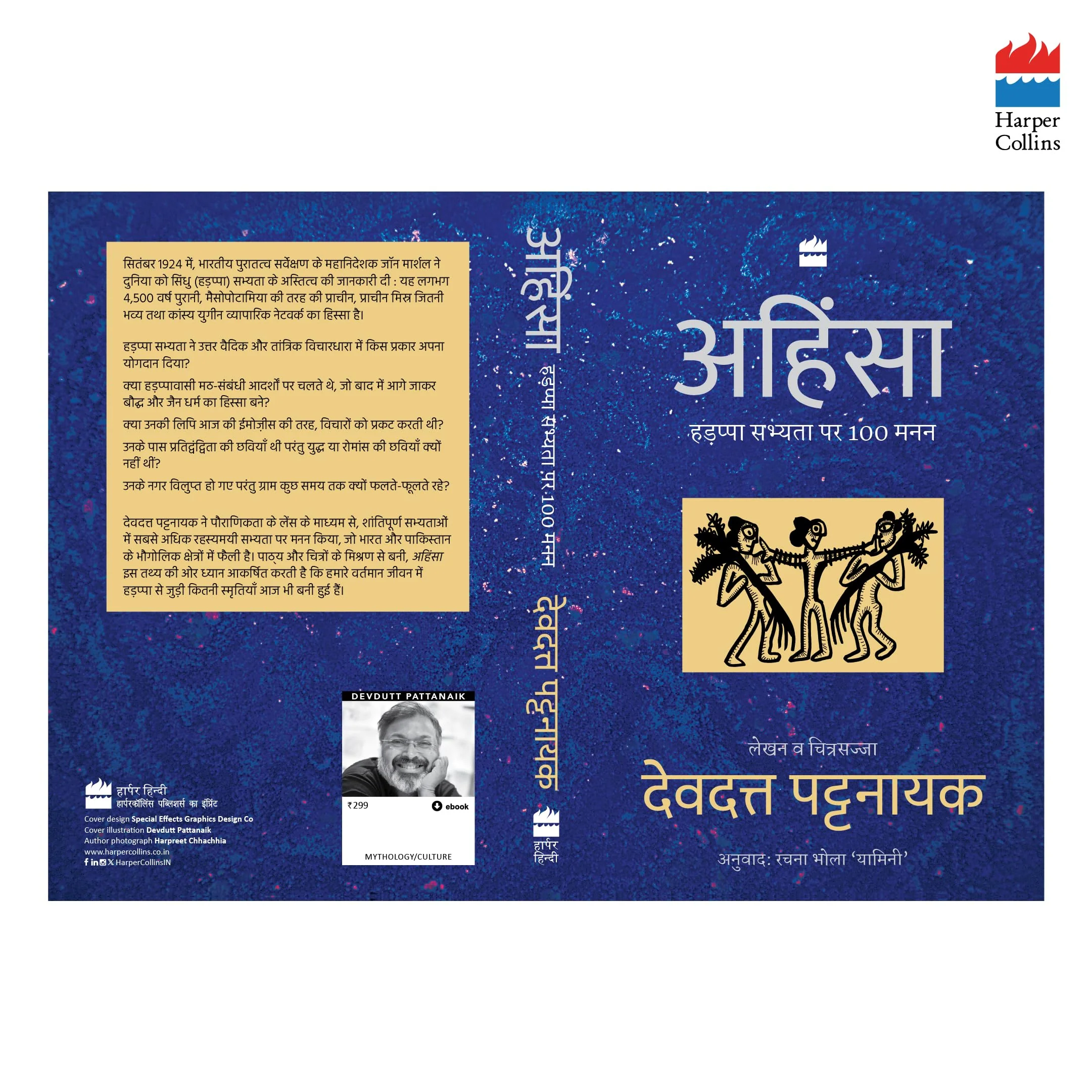
Details: In September 1924, John Marshall, Director General of the Archaeological Survey of India, informed the world about the existence of the Indus (Harappan) civilization: some 4,500 years old, as ancient as Mesopotamia, as grand as ancient Egypt, and a part of the Bronze Age trading network.
How did the Harappan civilization contribute to later Vedic and Tantrik thought?
Did the Harappans follow monastic ideals that later became part of Buddhism and Jainism?
Was their script like today's emojis, conveying ideas?
Why did they have images of rivalry but no images of war and no images of romance either?
Why did the cities disappear while the villages continued to flourish for some time?
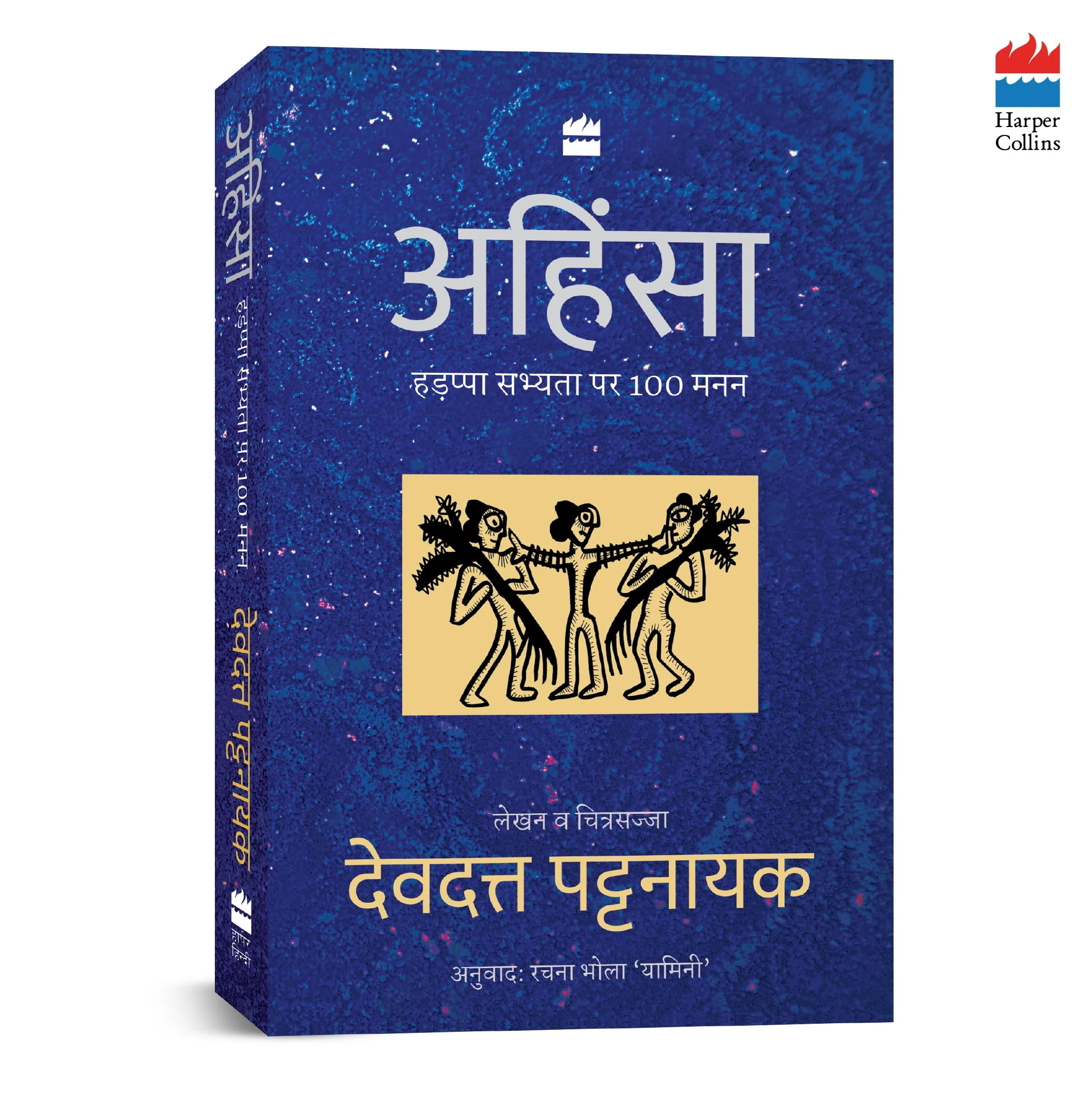
An eventful century later, Devdutt Pattanaik uses the lens of mythology to reflect on this most mysterious of 'peaceful' civilizations, now spread across geographies in India and Pakistan. A medley of text and illustrations, Ahimsa draws attention to how much Harappan memory persists in our lives today.
EAN: 9789369896776
Package Dimensions: 7.9 x 5.1 x 0.7 inches
Languages: English
Product Information
Product Information
Shipping & Returns
Shipping & Returns


Ahimsa : Hadappa Sabhyta Par 100 Manan
Ahimsa : Hadappa Sabhyta Par 100 Manan
Author: Pattanaik, Devdutt
Brand: HarperCollins Children's Books
Binding: Paperback
Number Of Pages: 264
Release Date: 05-11-2025
Details: In September 1924, John Marshall, Director General of the Archaeological Survey of India, informed the world about the existence of the Indus (Harappan) civilization: some 4,500 years old, as ancient as Mesopotamia, as grand as ancient Egypt, and a part of the Bronze Age trading network.
How did the Harappan civilization contribute to later Vedic and Tantrik thought?
Did the Harappans follow monastic ideals that later became part of Buddhism and Jainism?
Was their script like today's emojis, conveying ideas?
Why did they have images of rivalry but no images of war and no images of romance either?
Why did the cities disappear while the villages continued to flourish for some time?
An eventful century later, Devdutt Pattanaik uses the lens of mythology to reflect on this most mysterious of 'peaceful' civilizations, now spread across geographies in India and Pakistan. A medley of text and illustrations, Ahimsa draws attention to how much Harappan memory persists in our lives today.
EAN: 9789369896776
Package Dimensions: 7.9 x 5.1 x 0.7 inches
Languages: English
Original: $2.56
-70%$2.56
$0.77Product Information
Product Information
Shipping & Returns
Shipping & Returns
Description
Author: Pattanaik, Devdutt
Brand: HarperCollins Children's Books
Binding: Paperback
Number Of Pages: 264
Release Date: 05-11-2025
Details: In September 1924, John Marshall, Director General of the Archaeological Survey of India, informed the world about the existence of the Indus (Harappan) civilization: some 4,500 years old, as ancient as Mesopotamia, as grand as ancient Egypt, and a part of the Bronze Age trading network.
How did the Harappan civilization contribute to later Vedic and Tantrik thought?
Did the Harappans follow monastic ideals that later became part of Buddhism and Jainism?
Was their script like today's emojis, conveying ideas?
Why did they have images of rivalry but no images of war and no images of romance either?
Why did the cities disappear while the villages continued to flourish for some time?
An eventful century later, Devdutt Pattanaik uses the lens of mythology to reflect on this most mysterious of 'peaceful' civilizations, now spread across geographies in India and Pakistan. A medley of text and illustrations, Ahimsa draws attention to how much Harappan memory persists in our lives today.
EAN: 9789369896776
Package Dimensions: 7.9 x 5.1 x 0.7 inches
Languages: English