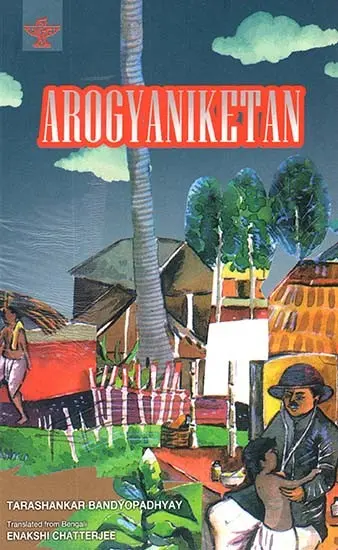
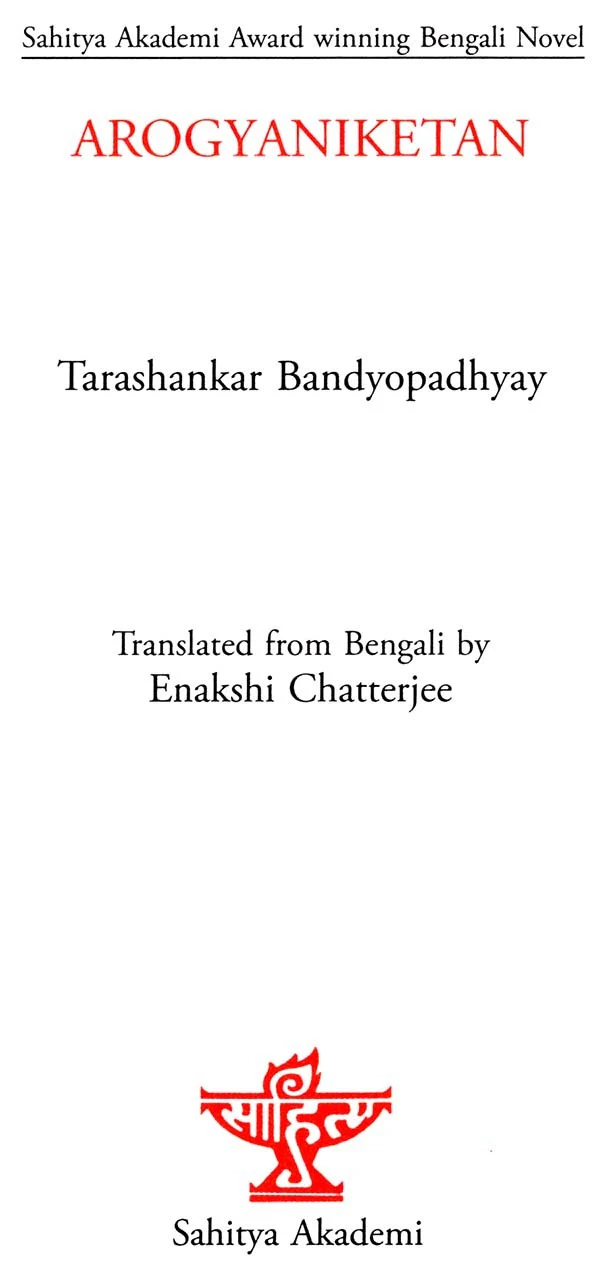
Arogyaniketan (English Translation Of Award-Winning Bengali Novel Arogyaniketan)
Book Details
-
Publisher: Sahitya Akademi
-
Author: Tarashankar Bandyopadhyay
-
Translator: Enakshi Chatterjee
-
Language: English
-
Pages: 352
-
Edition: 2020
-
Cover: Paperback
-
Dimensions: 21.5 cm x 14 cm
-
Weight: 400 gm
-
ISBN: 9789389778991
About the Book
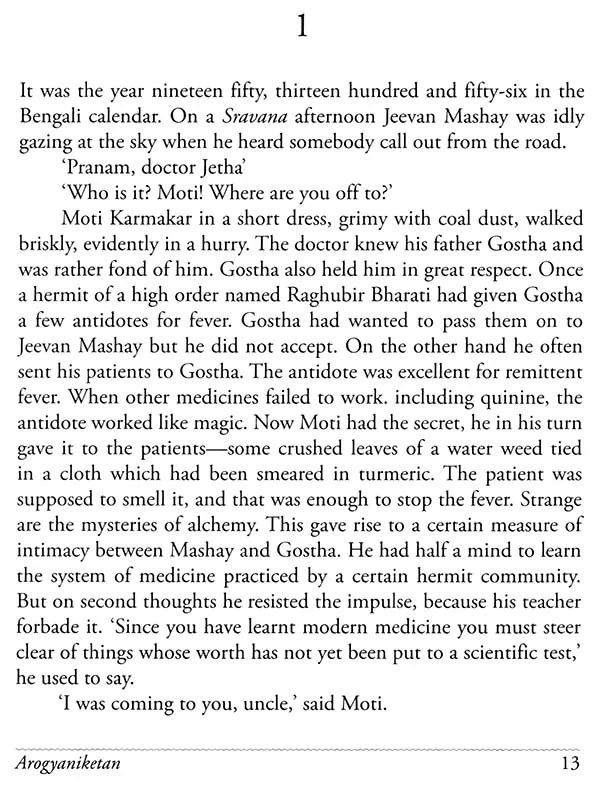
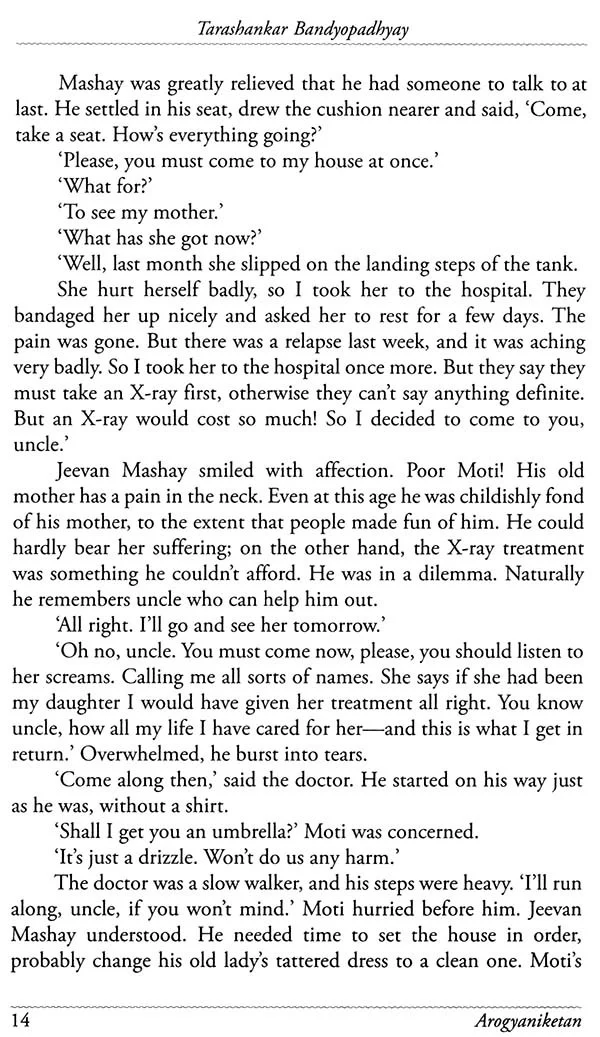
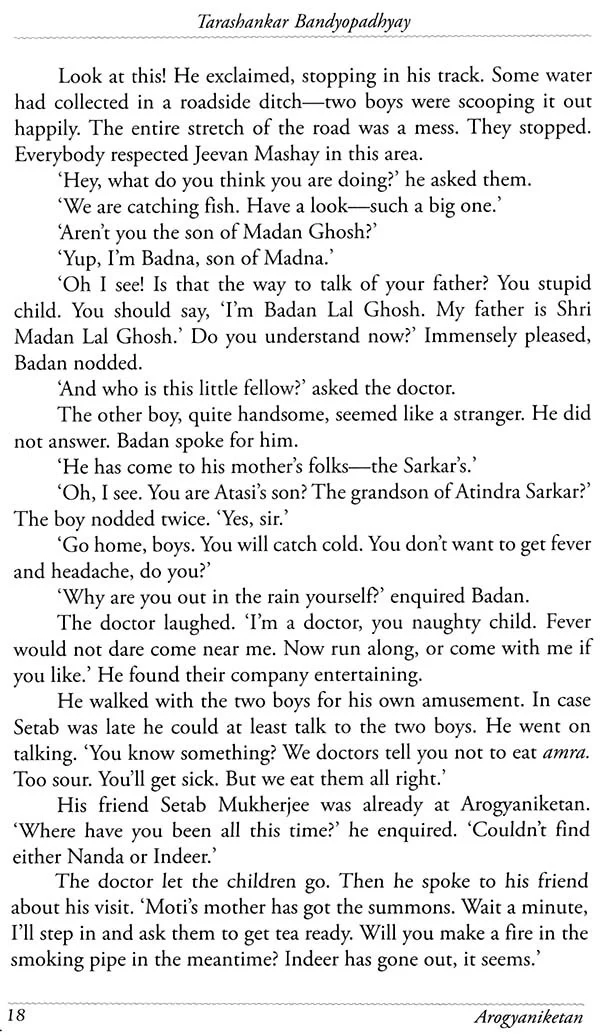
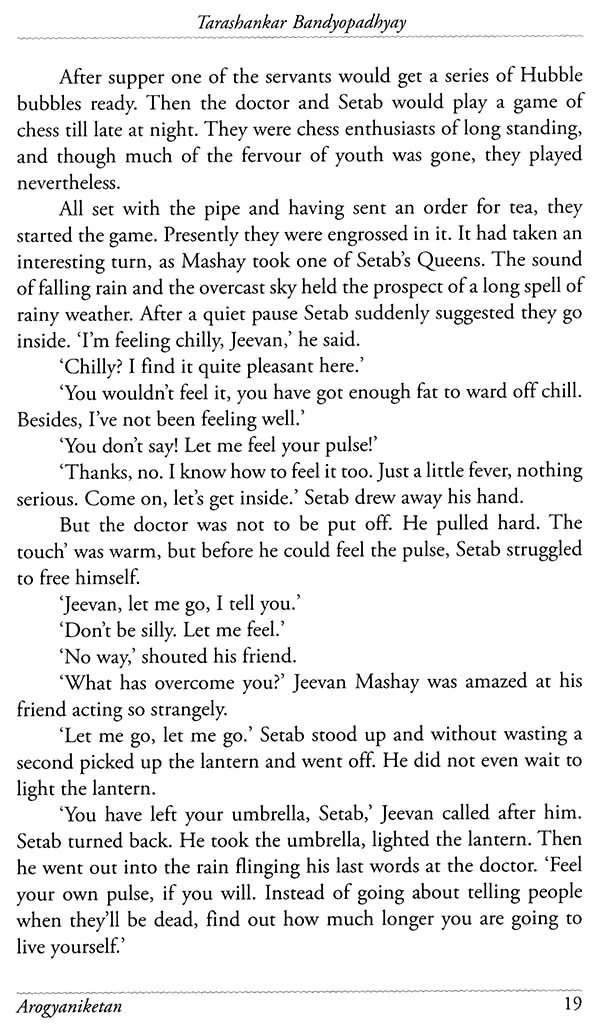
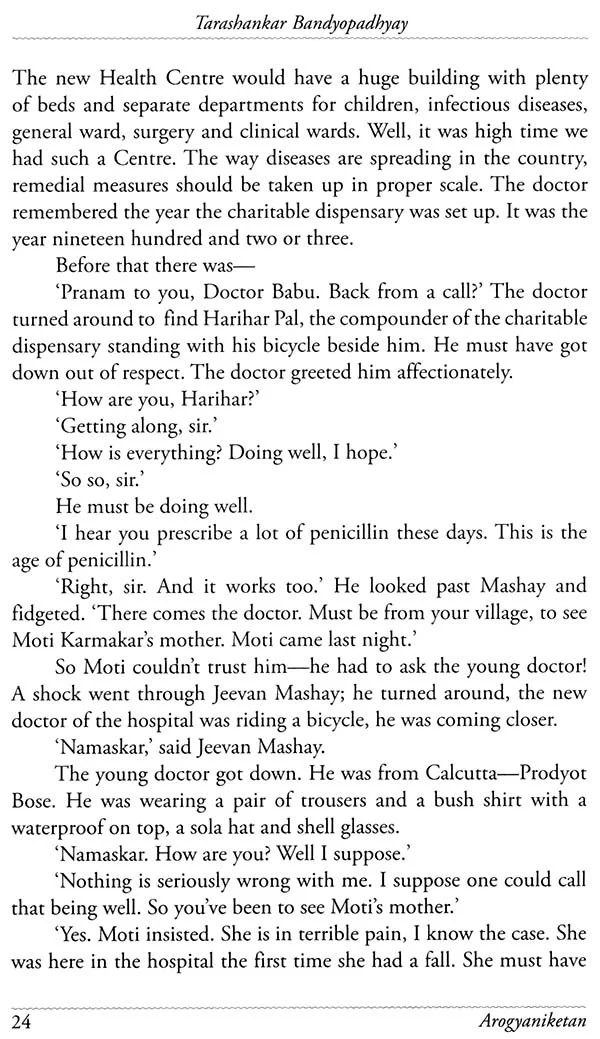
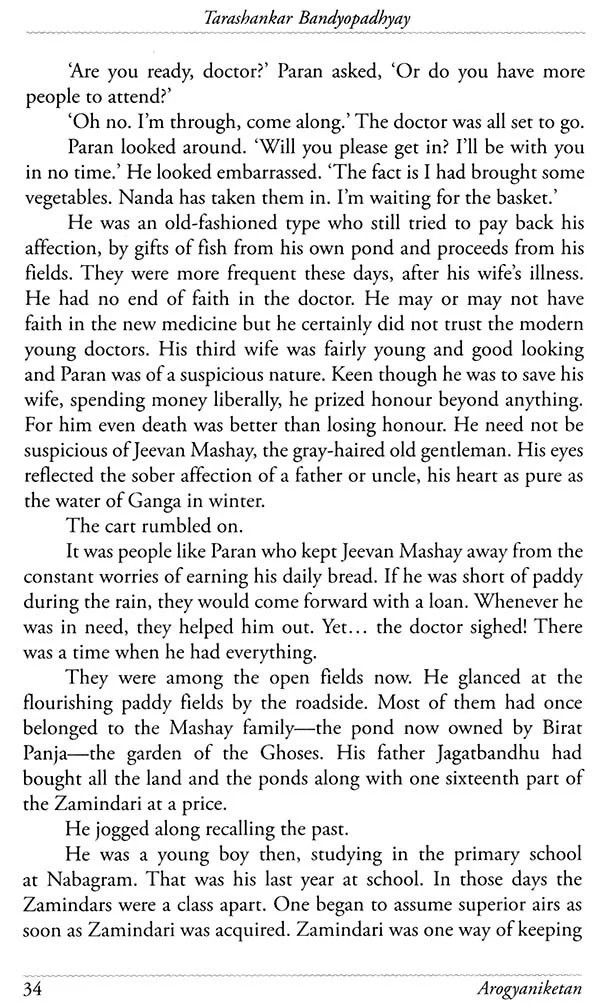
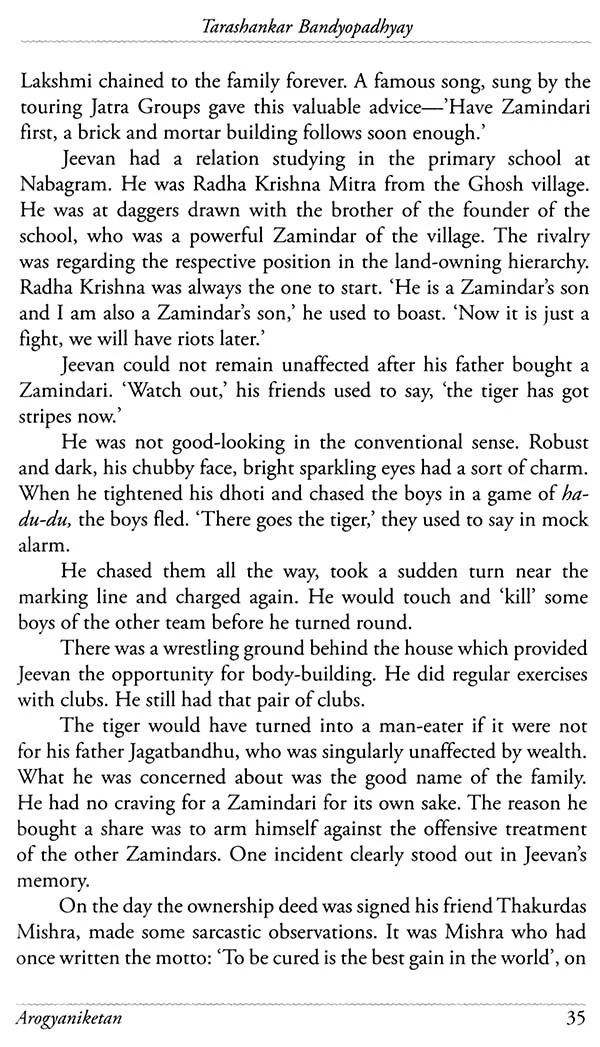
Arogyaniketan is a powerful and thought-provoking novel set in the red soil landscape of Birbhum, West Bengal, a region that forms the backdrop of many of Tarashankar Bandyopadhyay’s finest works. At one level, the novel presents a compelling conflict between two systems of healing—traditional Indian medicine rooted in Ayurveda and yogic practices, and modern Western allopathic medicine. While the ancient system emphasizes harmony, diet, herbs, and a philosophical acceptance of death as part of life’s continuum, modern medicine views death as something to be resisted at all costs. This clash of ethics and purpose forms the central tension of the narrative.
Beyond this surface conflict, the novel delves deeply into the universal human confrontation with mortality. Tarashankar Bandyopadhyay portrays human frailty, fear, and dignity with rare sensitivity and compassion. The story unfolds across multiple levels—social, philosophical, and interpersonal—making it not merely a novel about medical practices, but a profound meditation on life, death, and human values.
As the narrative progresses, the local setting gradually expands into a universal experience, a hallmark of Tarashankar Bandyopadhyay’s literary genius. The novel’s emotional depth and intellectual richness firmly establish it as an outstanding work of Indian fiction, capable of moving readers across cultures and generations.
About the Author
Tarashankar Bandyopadhyay (1898–1971) was one of the greatest novelists of modern Indian literature. Born in a village in Birbhum district, West Bengal, he left college to participate in the Non-cooperation Movement and was imprisoned for his political involvement. Thereafter, he devoted his life entirely to writing and produced an extraordinary body of work comprising around 130 books.
He is especially celebrated for his authentic portrayal of rural Bengal and marginalized communities, including laborers, artisans, folk painters, and tribal societies. His novels vividly capture the transition from feudalism to emerging modern social structures, as seen in works like Kalindi and Jalsaghar. Many of his novels and stories were adapted into films and plays. He received the Sahitya Akademi Award for Arogyaniketan and the prestigious Jnanpith Award for Ganadevata.
Product Information
Product Information
Shipping & Returns
Shipping & Returns

Arogyaniketan (English Translation Of Award-Winning Bengali Novel Arogyaniketan)
Arogyaniketan (English Translation Of Award-Winning Bengali Novel Arogyaniketan)
Book Details
-
Publisher: Sahitya Akademi
-
Author: Tarashankar Bandyopadhyay
-
Translator: Enakshi Chatterjee
-
Language: English
-
Pages: 352
-
Edition: 2020
-
Cover: Paperback
-
Dimensions: 21.5 cm x 14 cm
-
Weight: 400 gm
-
ISBN: 9789389778991
About the Book
Arogyaniketan is a powerful and thought-provoking novel set in the red soil landscape of Birbhum, West Bengal, a region that forms the backdrop of many of Tarashankar Bandyopadhyay’s finest works. At one level, the novel presents a compelling conflict between two systems of healing—traditional Indian medicine rooted in Ayurveda and yogic practices, and modern Western allopathic medicine. While the ancient system emphasizes harmony, diet, herbs, and a philosophical acceptance of death as part of life’s continuum, modern medicine views death as something to be resisted at all costs. This clash of ethics and purpose forms the central tension of the narrative.
Beyond this surface conflict, the novel delves deeply into the universal human confrontation with mortality. Tarashankar Bandyopadhyay portrays human frailty, fear, and dignity with rare sensitivity and compassion. The story unfolds across multiple levels—social, philosophical, and interpersonal—making it not merely a novel about medical practices, but a profound meditation on life, death, and human values.
As the narrative progresses, the local setting gradually expands into a universal experience, a hallmark of Tarashankar Bandyopadhyay’s literary genius. The novel’s emotional depth and intellectual richness firmly establish it as an outstanding work of Indian fiction, capable of moving readers across cultures and generations.
About the Author
Tarashankar Bandyopadhyay (1898–1971) was one of the greatest novelists of modern Indian literature. Born in a village in Birbhum district, West Bengal, he left college to participate in the Non-cooperation Movement and was imprisoned for his political involvement. Thereafter, he devoted his life entirely to writing and produced an extraordinary body of work comprising around 130 books.
He is especially celebrated for his authentic portrayal of rural Bengal and marginalized communities, including laborers, artisans, folk painters, and tribal societies. His novels vividly capture the transition from feudalism to emerging modern social structures, as seen in works like Kalindi and Jalsaghar. Many of his novels and stories were adapted into films and plays. He received the Sahitya Akademi Award for Arogyaniketan and the prestigious Jnanpith Award for Ganadevata.
Product Information
Product Information
Shipping & Returns
Shipping & Returns
Description
Book Details
-
Publisher: Sahitya Akademi
-
Author: Tarashankar Bandyopadhyay
-
Translator: Enakshi Chatterjee
-
Language: English
-
Pages: 352
-
Edition: 2020
-
Cover: Paperback
-
Dimensions: 21.5 cm x 14 cm
-
Weight: 400 gm
-
ISBN: 9789389778991
About the Book
Arogyaniketan is a powerful and thought-provoking novel set in the red soil landscape of Birbhum, West Bengal, a region that forms the backdrop of many of Tarashankar Bandyopadhyay’s finest works. At one level, the novel presents a compelling conflict between two systems of healing—traditional Indian medicine rooted in Ayurveda and yogic practices, and modern Western allopathic medicine. While the ancient system emphasizes harmony, diet, herbs, and a philosophical acceptance of death as part of life’s continuum, modern medicine views death as something to be resisted at all costs. This clash of ethics and purpose forms the central tension of the narrative.
Beyond this surface conflict, the novel delves deeply into the universal human confrontation with mortality. Tarashankar Bandyopadhyay portrays human frailty, fear, and dignity with rare sensitivity and compassion. The story unfolds across multiple levels—social, philosophical, and interpersonal—making it not merely a novel about medical practices, but a profound meditation on life, death, and human values.
As the narrative progresses, the local setting gradually expands into a universal experience, a hallmark of Tarashankar Bandyopadhyay’s literary genius. The novel’s emotional depth and intellectual richness firmly establish it as an outstanding work of Indian fiction, capable of moving readers across cultures and generations.
About the Author
Tarashankar Bandyopadhyay (1898–1971) was one of the greatest novelists of modern Indian literature. Born in a village in Birbhum district, West Bengal, he left college to participate in the Non-cooperation Movement and was imprisoned for his political involvement. Thereafter, he devoted his life entirely to writing and produced an extraordinary body of work comprising around 130 books.
He is especially celebrated for his authentic portrayal of rural Bengal and marginalized communities, including laborers, artisans, folk painters, and tribal societies. His novels vividly capture the transition from feudalism to emerging modern social structures, as seen in works like Kalindi and Jalsaghar. Many of his novels and stories were adapted into films and plays. He received the Sahitya Akademi Award for Arogyaniketan and the prestigious Jnanpith Award for Ganadevata.