ATLAS AND SYNOPSIS OF CONTACT AND OCCUPATIONAL DERMATOLOGY
Book Details
-
Publisher: Punascha
-
Author: Sanjay Ghosh
-
Language: English
-
Edition: 3/E, 2026
-
Pages: 140
-
ISBN: 9789372022728
-
Cover: Paperback
About the Book
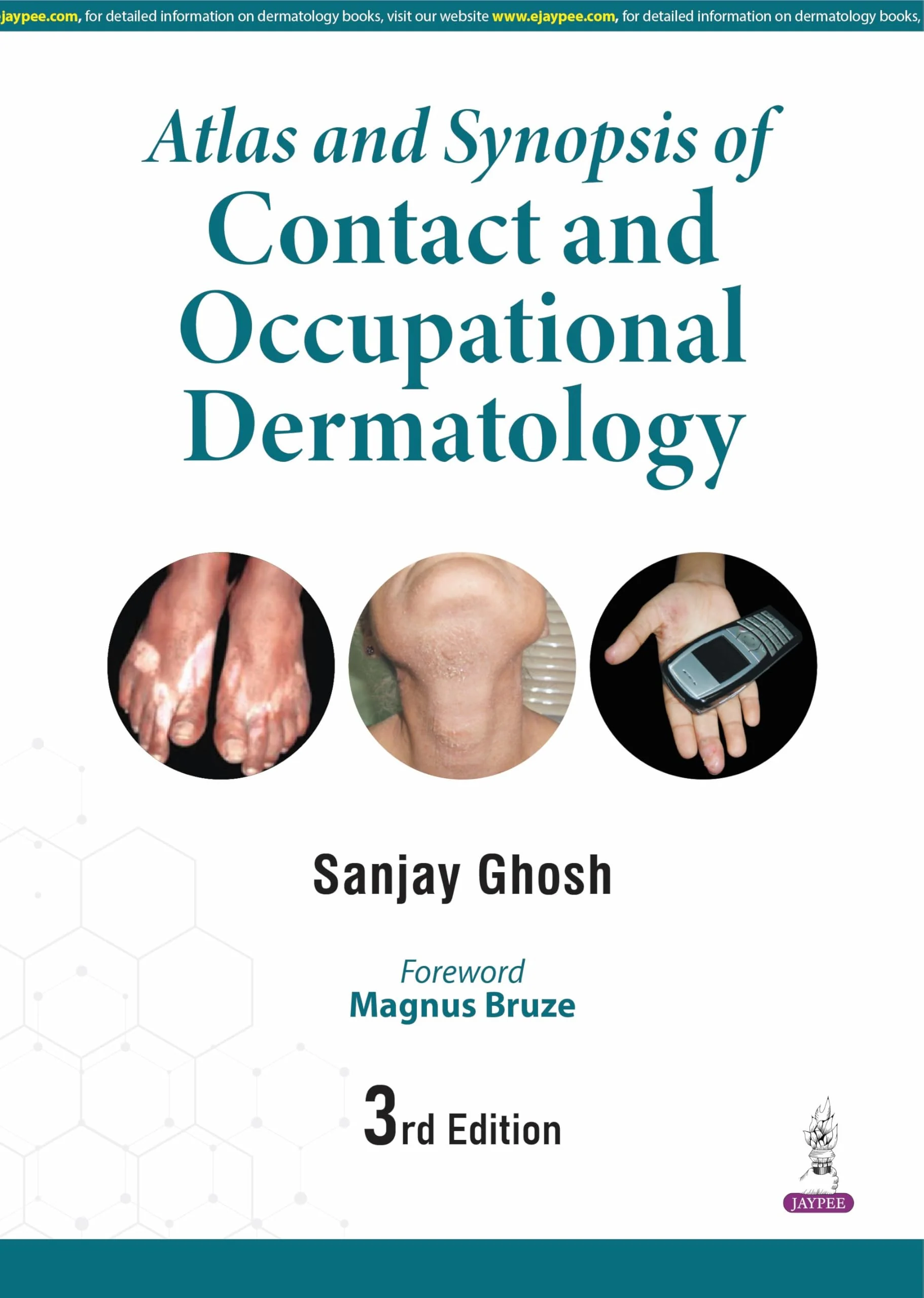
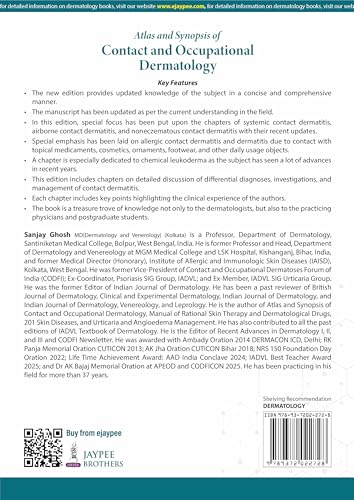
This updated 3/E, 2026 edition offers an in-depth and Asian-focused perspective on contact and occupational dermatoses—one of the most common and evolving dermatological conditions worldwide. With hazardous environmental and chemical exposures increasing and constantly changing, this book serves as a crucial reference for dermatologists, physicians, and postgraduate students.
The content has been meticulously revised to reflect current scientific understanding and clinical advancements. Special emphasis has been placed on systemic contact dermatitis, airborne contact dermatitis, and noneczematous variants. The edition also expands on allergic contact dermatitis caused by medicaments, cosmetics, footwear, ornaments, and other daily-use substances.
A dedicated chapter on chemical leukoderma highlights recent breakthroughs, while additional sections thoroughly cover differential diagnoses, investigations, and updated management approaches. Each chapter integrates key clinical points drawn from the authors’ expertise, making this volume both practical and academically enriching. It stands as an essential guide for understanding, diagnosing, and managing dermatoses in diverse clinical settings.
Product Information
Product Information
Shipping & Returns
Shipping & Returns
ATLAS AND SYNOPSIS OF CONTACT AND OCCUPATIONAL DERMATOLOGY
ATLAS AND SYNOPSIS OF CONTACT AND OCCUPATIONAL DERMATOLOGY
Book Details
-
Publisher: Punascha
-
Author: Sanjay Ghosh
-
Language: English
-
Edition: 3/E, 2026
-
Pages: 140
-
ISBN: 9789372022728
-
Cover: Paperback
About the Book
This updated 3/E, 2026 edition offers an in-depth and Asian-focused perspective on contact and occupational dermatoses—one of the most common and evolving dermatological conditions worldwide. With hazardous environmental and chemical exposures increasing and constantly changing, this book serves as a crucial reference for dermatologists, physicians, and postgraduate students.
The content has been meticulously revised to reflect current scientific understanding and clinical advancements. Special emphasis has been placed on systemic contact dermatitis, airborne contact dermatitis, and noneczematous variants. The edition also expands on allergic contact dermatitis caused by medicaments, cosmetics, footwear, ornaments, and other daily-use substances.
A dedicated chapter on chemical leukoderma highlights recent breakthroughs, while additional sections thoroughly cover differential diagnoses, investigations, and updated management approaches. Each chapter integrates key clinical points drawn from the authors’ expertise, making this volume both practical and academically enriching. It stands as an essential guide for understanding, diagnosing, and managing dermatoses in diverse clinical settings.
Product Information
Product Information
Shipping & Returns
Shipping & Returns
Description
Book Details
-
Publisher: Punascha
-
Author: Sanjay Ghosh
-
Language: English
-
Edition: 3/E, 2026
-
Pages: 140
-
ISBN: 9789372022728
-
Cover: Paperback
About the Book
This updated 3/E, 2026 edition offers an in-depth and Asian-focused perspective on contact and occupational dermatoses—one of the most common and evolving dermatological conditions worldwide. With hazardous environmental and chemical exposures increasing and constantly changing, this book serves as a crucial reference for dermatologists, physicians, and postgraduate students.
The content has been meticulously revised to reflect current scientific understanding and clinical advancements. Special emphasis has been placed on systemic contact dermatitis, airborne contact dermatitis, and noneczematous variants. The edition also expands on allergic contact dermatitis caused by medicaments, cosmetics, footwear, ornaments, and other daily-use substances.
A dedicated chapter on chemical leukoderma highlights recent breakthroughs, while additional sections thoroughly cover differential diagnoses, investigations, and updated management approaches. Each chapter integrates key clinical points drawn from the authors’ expertise, making this volume both practical and academically enriching. It stands as an essential guide for understanding, diagnosing, and managing dermatoses in diverse clinical settings.