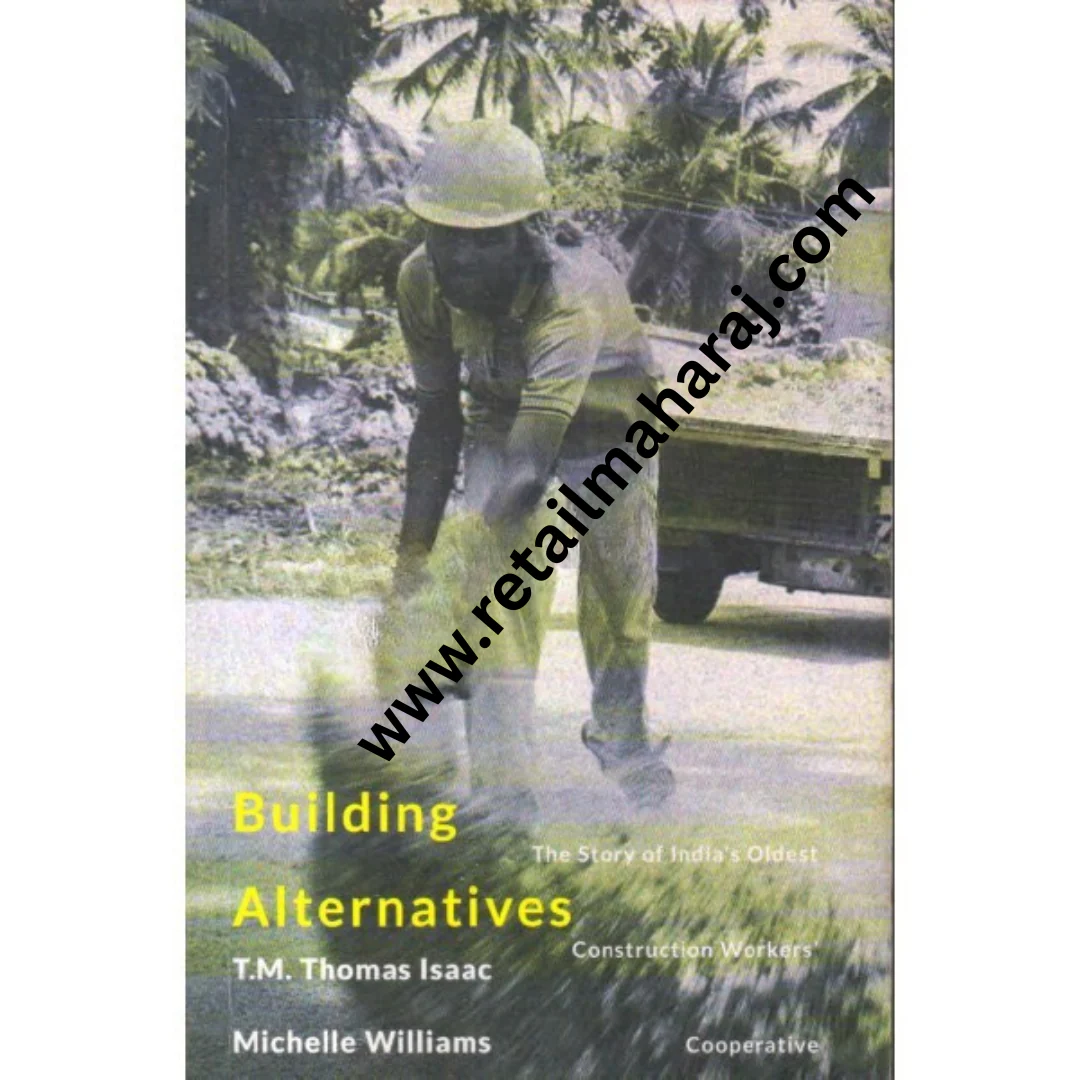
Building alternatives the story of indias oldest construction workers
Book Details
• Author: T. M. Thomas Isaac and Michelle Williams
• Publisher: LeftWord Books
• Language: English
• Published Year: 2017
• Pages: 320
• Dimensions: 21 x 13 cm
• Binding: Paperback
• ISBN: 9789380118468
• Book Condition: Used – Good
• Condition Note: Book is in good condition.
• Availability: In Stock
About the Book
Building Alternatives by T. M. Thomas Isaac and Michelle Williams presents the remarkable story of the Uralungal Labour Contract Cooperative Society (ULCCS), one of India’s most successful worker cooperatives. The book examines how this unique cooperative in Kerala evolved from a small local initiative into a major infrastructure and construction enterprise while remaining firmly rooted in democratic worker control.
Through detailed research and narrative analysis, the authors explore how the cooperative model provided an alternative approach to development, combining efficiency, social responsibility, and collective ownership. The book highlights how ULCCS challenged conventional business structures and demonstrated that worker-led enterprises can compete successfully in complex economic sectors.
The work also discusses the broader implications of cooperative movements in promoting equitable growth, community participation, and sustainable development. An important contribution to studies on development economics, cooperative movements, and social innovation, this book is valuable for students, researchers, and readers interested in alternative economic models and grassroots development.
Product Information
Product Information
Shipping & Returns
Shipping & Returns
Building alternatives the story of indias oldest construction workers
Building alternatives the story of indias oldest construction workers
Book Details
• Author: T. M. Thomas Isaac and Michelle Williams
• Publisher: LeftWord Books
• Language: English
• Published Year: 2017
• Pages: 320
• Dimensions: 21 x 13 cm
• Binding: Paperback
• ISBN: 9789380118468
• Book Condition: Used – Good
• Condition Note: Book is in good condition.
• Availability: In Stock
About the Book
Building Alternatives by T. M. Thomas Isaac and Michelle Williams presents the remarkable story of the Uralungal Labour Contract Cooperative Society (ULCCS), one of India’s most successful worker cooperatives. The book examines how this unique cooperative in Kerala evolved from a small local initiative into a major infrastructure and construction enterprise while remaining firmly rooted in democratic worker control.
Through detailed research and narrative analysis, the authors explore how the cooperative model provided an alternative approach to development, combining efficiency, social responsibility, and collective ownership. The book highlights how ULCCS challenged conventional business structures and demonstrated that worker-led enterprises can compete successfully in complex economic sectors.
The work also discusses the broader implications of cooperative movements in promoting equitable growth, community participation, and sustainable development. An important contribution to studies on development economics, cooperative movements, and social innovation, this book is valuable for students, researchers, and readers interested in alternative economic models and grassroots development.
Original: $4.21
-70%$4.21
$1.26Product Information
Product Information
Shipping & Returns
Shipping & Returns
Description
Book Details
• Author: T. M. Thomas Isaac and Michelle Williams
• Publisher: LeftWord Books
• Language: English
• Published Year: 2017
• Pages: 320
• Dimensions: 21 x 13 cm
• Binding: Paperback
• ISBN: 9789380118468
• Book Condition: Used – Good
• Condition Note: Book is in good condition.
• Availability: In Stock
About the Book
Building Alternatives by T. M. Thomas Isaac and Michelle Williams presents the remarkable story of the Uralungal Labour Contract Cooperative Society (ULCCS), one of India’s most successful worker cooperatives. The book examines how this unique cooperative in Kerala evolved from a small local initiative into a major infrastructure and construction enterprise while remaining firmly rooted in democratic worker control.
Through detailed research and narrative analysis, the authors explore how the cooperative model provided an alternative approach to development, combining efficiency, social responsibility, and collective ownership. The book highlights how ULCCS challenged conventional business structures and demonstrated that worker-led enterprises can compete successfully in complex economic sectors.
The work also discusses the broader implications of cooperative movements in promoting equitable growth, community participation, and sustainable development. An important contribution to studies on development economics, cooperative movements, and social innovation, this book is valuable for students, researchers, and readers interested in alternative economic models and grassroots development.