Hampi World Heritage Area
Book Details
• Publisher: Itaga Nagaraja Prakashana
• Language: English
• Published Year: 2017
• Pages: 72
• Dimensions: 17 x 13 cm
• Book Condition: Used – Good
• Condition Note: Book is in good condition
• Availability: In Stock
About the Book
Hampi World Heritage Area by Dr. C. S. Vasudevan provides an informative overview of the historic ruins and cultural heritage of Hampi, one of India’s most significant archaeological and historical sites. Once the magnificent capital of the Vijayanagara Empire, Hampi is renowned for its impressive temples, monuments, and stone structures that reflect the grandeur of a powerful medieval civilization.
The book explores the historical background of the Vijayanagara Empire and explains how Hampi developed into a major center of political power, religion, trade, and art. It highlights the architectural brilliance of the temples, palaces, and public structures that remain as remarkable examples of South Indian temple architecture and urban planning.
Through clear descriptions and historical insights, the author introduces readers to the cultural significance of Hampi and its recognition as a UNESCO World Heritage Site. The book also discusses the importance of preserving these ancient monuments and protecting the region’s rich historical legacy.
Hampi World Heritage Area is a useful guide for students, history enthusiasts, travelers, and readers interested in Indian archaeology, heritage sites, and the legacy of the Vijayanagara Empire.
Product Information
Product Information
Shipping & Returns
Shipping & Returns
Hampi World Heritage Area
Hampi World Heritage Area
Book Details
• Publisher: Itaga Nagaraja Prakashana
• Language: English
• Published Year: 2017
• Pages: 72
• Dimensions: 17 x 13 cm
• Book Condition: Used – Good
• Condition Note: Book is in good condition
• Availability: In Stock
About the Book
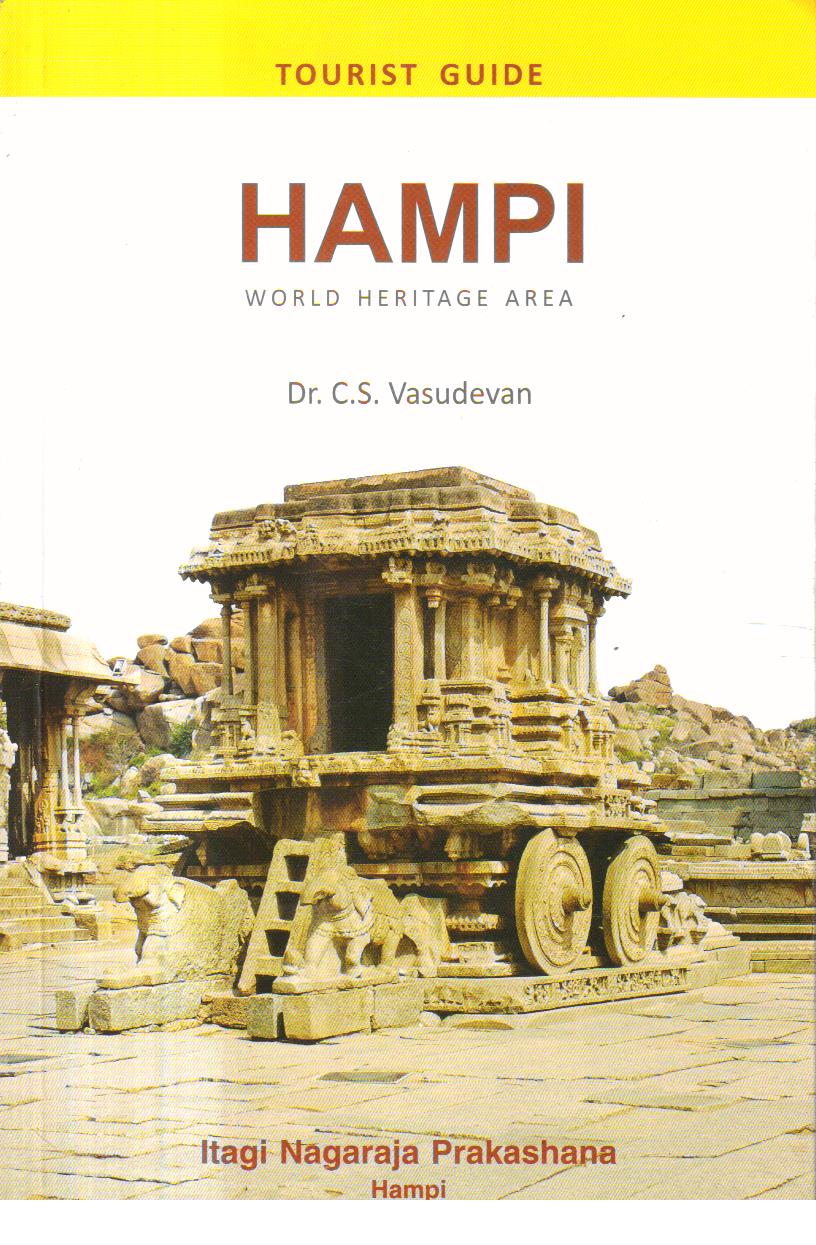
Hampi World Heritage Area by Dr. C. S. Vasudevan provides an informative overview of the historic ruins and cultural heritage of Hampi, one of India’s most significant archaeological and historical sites. Once the magnificent capital of the Vijayanagara Empire, Hampi is renowned for its impressive temples, monuments, and stone structures that reflect the grandeur of a powerful medieval civilization.
The book explores the historical background of the Vijayanagara Empire and explains how Hampi developed into a major center of political power, religion, trade, and art. It highlights the architectural brilliance of the temples, palaces, and public structures that remain as remarkable examples of South Indian temple architecture and urban planning.
Through clear descriptions and historical insights, the author introduces readers to the cultural significance of Hampi and its recognition as a UNESCO World Heritage Site. The book also discusses the importance of preserving these ancient monuments and protecting the region’s rich historical legacy.
Hampi World Heritage Area is a useful guide for students, history enthusiasts, travelers, and readers interested in Indian archaeology, heritage sites, and the legacy of the Vijayanagara Empire.
Original: $1.01
-70%$1.01
$0.30Product Information
Product Information
Shipping & Returns
Shipping & Returns
Description
Book Details
• Publisher: Itaga Nagaraja Prakashana
• Language: English
• Published Year: 2017
• Pages: 72
• Dimensions: 17 x 13 cm
• Book Condition: Used – Good
• Condition Note: Book is in good condition
• Availability: In Stock
About the Book
Hampi World Heritage Area by Dr. C. S. Vasudevan provides an informative overview of the historic ruins and cultural heritage of Hampi, one of India’s most significant archaeological and historical sites. Once the magnificent capital of the Vijayanagara Empire, Hampi is renowned for its impressive temples, monuments, and stone structures that reflect the grandeur of a powerful medieval civilization.
The book explores the historical background of the Vijayanagara Empire and explains how Hampi developed into a major center of political power, religion, trade, and art. It highlights the architectural brilliance of the temples, palaces, and public structures that remain as remarkable examples of South Indian temple architecture and urban planning.
Through clear descriptions and historical insights, the author introduces readers to the cultural significance of Hampi and its recognition as a UNESCO World Heritage Site. The book also discusses the importance of preserving these ancient monuments and protecting the region’s rich historical legacy.
Hampi World Heritage Area is a useful guide for students, history enthusiasts, travelers, and readers interested in Indian archaeology, heritage sites, and the legacy of the Vijayanagara Empire.