India Translated by James Hogarth
Book Details
• Publisher: Nagel Publishers
• Language: English
• Published Year: 1970
• Pages: 262
• Dimensions: 24 x 16 cm
• Book Condition: Used – Good
• Condition Note: Book is in good condition but the jacket is missing
• Availability: In Stock
About the Book
Gandhara Art by Maurizio Taddei is an insightful study of the artistic traditions that developed in the ancient region of Gandhara, an area that once flourished as an important cultural and artistic center in the northwestern part of the Indian subcontinent. The book examines the unique artistic style that emerged through the interaction of Indian, Greek, Persian, and Central Asian influences.
The work highlights the development of Buddhist art in Gandhara, particularly the sculptural representations of the Buddha and various Bodhisattvas. It explores how artists combined classical Greco-Roman artistic techniques with Indian religious themes, creating a distinctive artistic tradition that played a significant role in the spread of Buddhist visual culture.
Through detailed descriptions and historical context, the author discusses the evolution of Gandhara sculpture, architecture, and iconography. The book also explains the cultural and historical environment in which these artistic forms developed, providing readers with a deeper understanding of the region’s contribution to the history of Asian art.
Gandhara Art is a valuable resource for readers interested in archaeology, Buddhist studies, art history, and the cultural exchanges that shaped ancient artistic traditions in South and Central Asia.
Product Information
Product Information
Shipping & Returns
Shipping & Returns
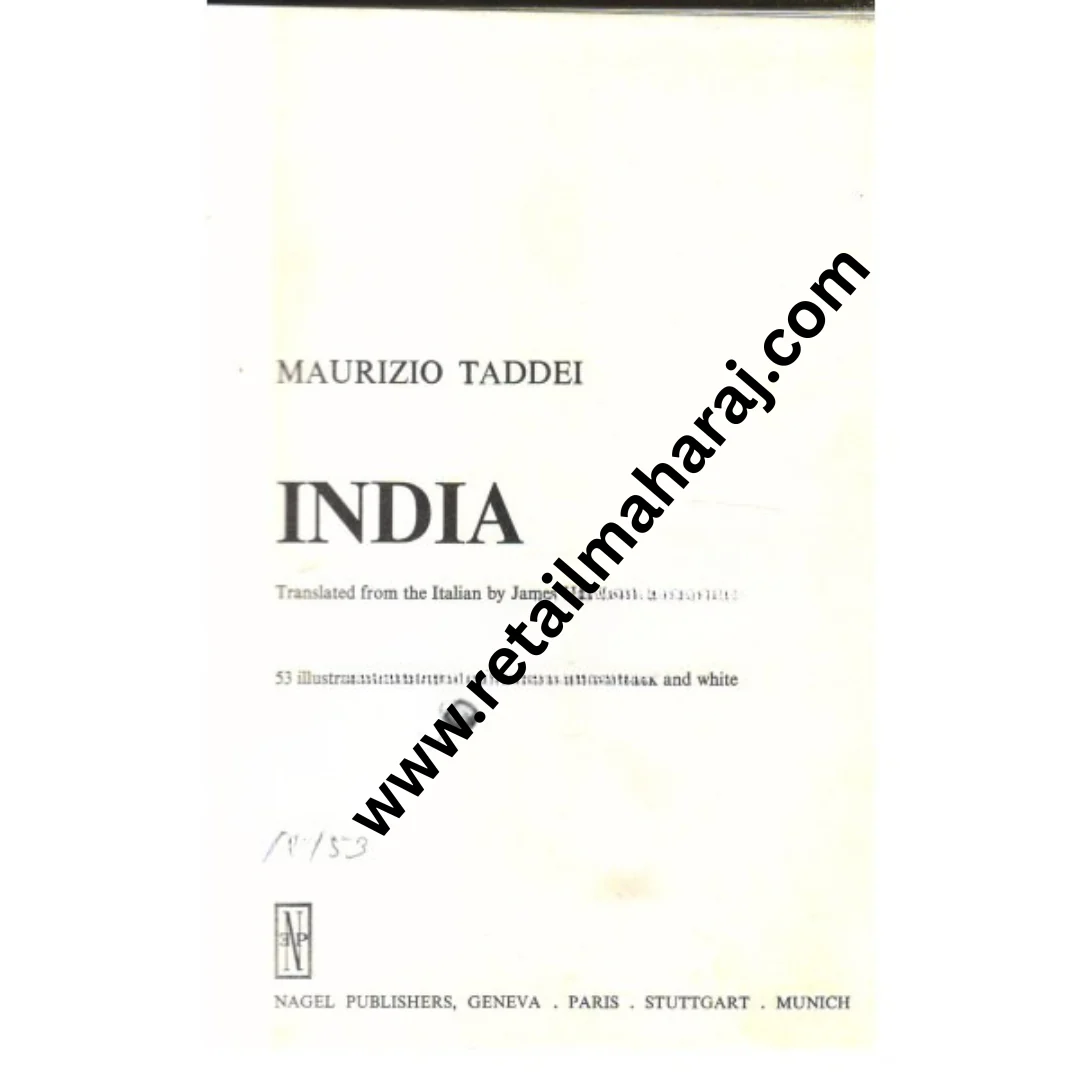
India Translated by James Hogarth
India Translated by James Hogarth
Book Details
• Publisher: Nagel Publishers
• Language: English
• Published Year: 1970
• Pages: 262
• Dimensions: 24 x 16 cm
• Book Condition: Used – Good
• Condition Note: Book is in good condition but the jacket is missing
• Availability: In Stock
About the Book
Gandhara Art by Maurizio Taddei is an insightful study of the artistic traditions that developed in the ancient region of Gandhara, an area that once flourished as an important cultural and artistic center in the northwestern part of the Indian subcontinent. The book examines the unique artistic style that emerged through the interaction of Indian, Greek, Persian, and Central Asian influences.
The work highlights the development of Buddhist art in Gandhara, particularly the sculptural representations of the Buddha and various Bodhisattvas. It explores how artists combined classical Greco-Roman artistic techniques with Indian religious themes, creating a distinctive artistic tradition that played a significant role in the spread of Buddhist visual culture.
Through detailed descriptions and historical context, the author discusses the evolution of Gandhara sculpture, architecture, and iconography. The book also explains the cultural and historical environment in which these artistic forms developed, providing readers with a deeper understanding of the region’s contribution to the history of Asian art.
Gandhara Art is a valuable resource for readers interested in archaeology, Buddhist studies, art history, and the cultural exchanges that shaped ancient artistic traditions in South and Central Asia.
Product Information
Product Information
Shipping & Returns
Shipping & Returns
Description
Book Details
• Publisher: Nagel Publishers
• Language: English
• Published Year: 1970
• Pages: 262
• Dimensions: 24 x 16 cm
• Book Condition: Used – Good
• Condition Note: Book is in good condition but the jacket is missing
• Availability: In Stock
About the Book
Gandhara Art by Maurizio Taddei is an insightful study of the artistic traditions that developed in the ancient region of Gandhara, an area that once flourished as an important cultural and artistic center in the northwestern part of the Indian subcontinent. The book examines the unique artistic style that emerged through the interaction of Indian, Greek, Persian, and Central Asian influences.
The work highlights the development of Buddhist art in Gandhara, particularly the sculptural representations of the Buddha and various Bodhisattvas. It explores how artists combined classical Greco-Roman artistic techniques with Indian religious themes, creating a distinctive artistic tradition that played a significant role in the spread of Buddhist visual culture.
Through detailed descriptions and historical context, the author discusses the evolution of Gandhara sculpture, architecture, and iconography. The book also explains the cultural and historical environment in which these artistic forms developed, providing readers with a deeper understanding of the region’s contribution to the history of Asian art.
Gandhara Art is a valuable resource for readers interested in archaeology, Buddhist studies, art history, and the cultural exchanges that shaped ancient artistic traditions in South and Central Asia.