Konarak Sundari (Bengali Version)
Book Details
-
Publisher: Deep Prakashan
-
Author: Prasenjit Dasgupta
-
Language: Bengali
About the Book
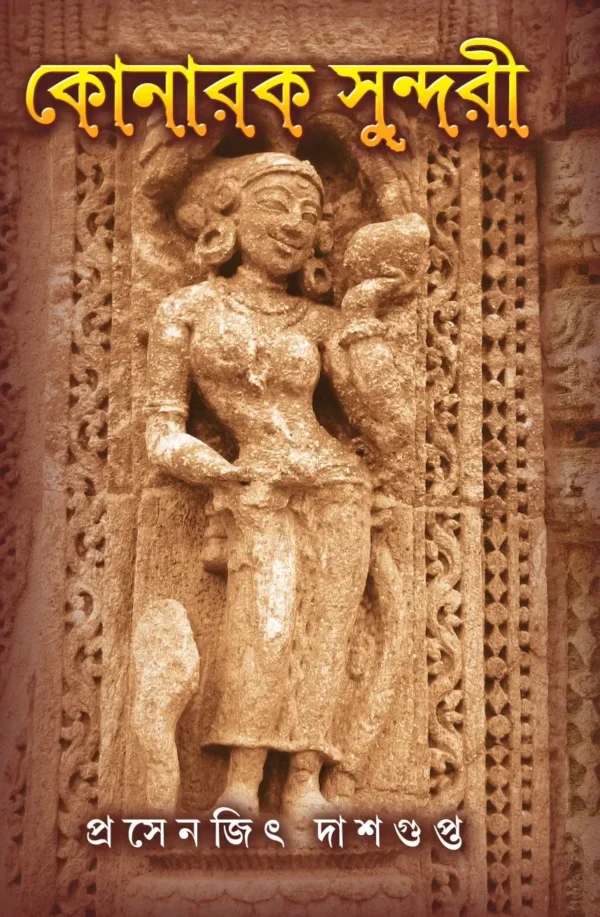
Konarak Sundari (Bengali Version) is an aesthetic and interpretative exploration of the feminine sculptures of the Konark Sun Temple. The book examines the grace, beauty, expression, posture, and emotional depth embodied in the countless female figures carved into the temple’s stone walls.
Rather than entering into debates about the presence of feminine or erotic imagery in temple architecture, the author approaches the subject from the perspective of a sensitive art-lover. Through a contemplative lens, the book seeks to understand the social position of women in ancient Kalinga and broader Indian society, as reflected in these sculptures.
Moving beyond rigid academic grammar or historical severity, the narrative searches for beauty and artistic resonance. It draws imaginative parallels between literary descriptions composed before and after the temple’s construction and the sculptural elegance of the Konark figures—their poise, tenderness, and the silent emotions captured in stone.
This work is ideal for readers interested in Indian temple art, cultural history, aesthetic interpretation, and the symbolic representation of femininity in classical architecture.
Product Information
Product Information
Shipping & Returns
Shipping & Returns
Konarak Sundari (Bengali Version)
Konarak Sundari (Bengali Version)
Book Details
-
Publisher: Deep Prakashan
-
Author: Prasenjit Dasgupta
-
Language: Bengali
About the Book
Konarak Sundari (Bengali Version) is an aesthetic and interpretative exploration of the feminine sculptures of the Konark Sun Temple. The book examines the grace, beauty, expression, posture, and emotional depth embodied in the countless female figures carved into the temple’s stone walls.
Rather than entering into debates about the presence of feminine or erotic imagery in temple architecture, the author approaches the subject from the perspective of a sensitive art-lover. Through a contemplative lens, the book seeks to understand the social position of women in ancient Kalinga and broader Indian society, as reflected in these sculptures.
Moving beyond rigid academic grammar or historical severity, the narrative searches for beauty and artistic resonance. It draws imaginative parallels between literary descriptions composed before and after the temple’s construction and the sculptural elegance of the Konark figures—their poise, tenderness, and the silent emotions captured in stone.
This work is ideal for readers interested in Indian temple art, cultural history, aesthetic interpretation, and the symbolic representation of femininity in classical architecture.
Original: $2.56
-70%$2.56
$0.77Product Information
Product Information
Shipping & Returns
Shipping & Returns
Description
Book Details
-
Publisher: Deep Prakashan
-
Author: Prasenjit Dasgupta
-
Language: Bengali
About the Book
Konarak Sundari (Bengali Version) is an aesthetic and interpretative exploration of the feminine sculptures of the Konark Sun Temple. The book examines the grace, beauty, expression, posture, and emotional depth embodied in the countless female figures carved into the temple’s stone walls.
Rather than entering into debates about the presence of feminine or erotic imagery in temple architecture, the author approaches the subject from the perspective of a sensitive art-lover. Through a contemplative lens, the book seeks to understand the social position of women in ancient Kalinga and broader Indian society, as reflected in these sculptures.
Moving beyond rigid academic grammar or historical severity, the narrative searches for beauty and artistic resonance. It draws imaginative parallels between literary descriptions composed before and after the temple’s construction and the sculptural elegance of the Konark figures—their poise, tenderness, and the silent emotions captured in stone.
This work is ideal for readers interested in Indian temple art, cultural history, aesthetic interpretation, and the symbolic representation of femininity in classical architecture.