revolution and counter revolution in chile
Book Details
-
Author: Paul M. Sweezy
-
Publisher: Monthly Review Press
-
Language: English
-
Published Year: 1973
-
Pages: 169
-
Cover: Paperback
-
Dimensions: 20 x 13 cm
-
Condition: Used – Good (Pages are yellowish due to age)
About the Book
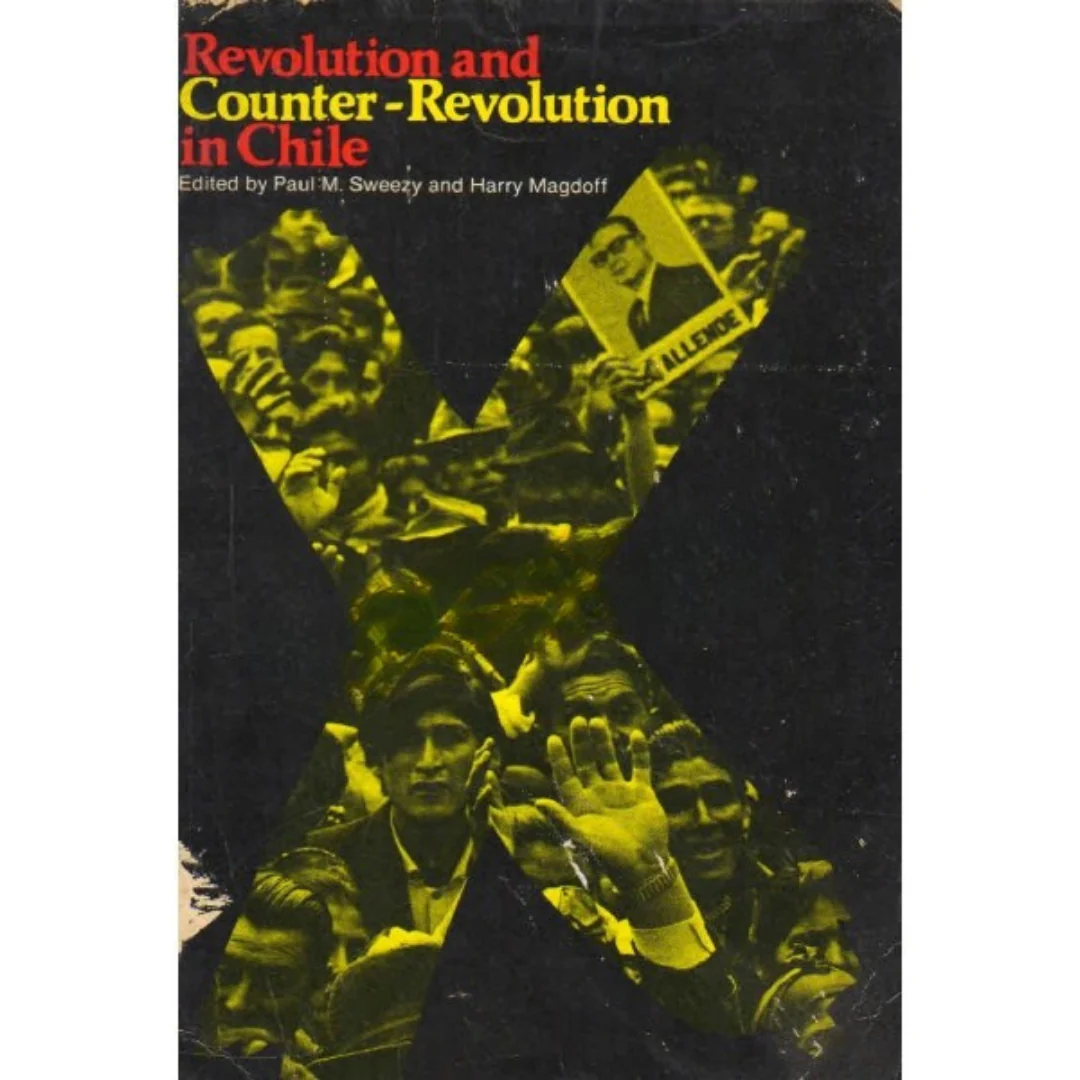
This 1973 paperback edition from Monthly Review Press presents a critical collection of essays examining the rise and fall of Chile’s Popular Unity government under Salvador Allende. Written from a Marxist analytical perspective, the volume explores the political strategy, economic challenges, and ideological tensions surrounding Chile’s attempt at a peaceful transition to socialism.
Across 169 pages, contributors—including Paul M. Sweezy, James Petras, and others—offer a detailed leftist critique of both internal contradictions within the Popular Unity movement and the powerful external pressures it faced. Particular attention is given to economic destabilization, class conflict, and the role of U.S. involvement leading up to the 1973 military coup. The essays combine theoretical analysis with contemporary political commentary, making the book a significant historical document of Cold War-era debates on socialism and imperialism.
Though the pages have naturally yellowed over time, the book remains in good reading condition. This edition is especially valuable for students of Latin American history, political economy, Marxist theory, and Cold War international relations.
Product Information
Product Information
Shipping & Returns
Shipping & Returns
revolution and counter revolution in chile
revolution and counter revolution in chile
Book Details
-
Author: Paul M. Sweezy
-
Publisher: Monthly Review Press
-
Language: English
-
Published Year: 1973
-
Pages: 169
-
Cover: Paperback
-
Dimensions: 20 x 13 cm
-
Condition: Used – Good (Pages are yellowish due to age)
About the Book
This 1973 paperback edition from Monthly Review Press presents a critical collection of essays examining the rise and fall of Chile’s Popular Unity government under Salvador Allende. Written from a Marxist analytical perspective, the volume explores the political strategy, economic challenges, and ideological tensions surrounding Chile’s attempt at a peaceful transition to socialism.
Across 169 pages, contributors—including Paul M. Sweezy, James Petras, and others—offer a detailed leftist critique of both internal contradictions within the Popular Unity movement and the powerful external pressures it faced. Particular attention is given to economic destabilization, class conflict, and the role of U.S. involvement leading up to the 1973 military coup. The essays combine theoretical analysis with contemporary political commentary, making the book a significant historical document of Cold War-era debates on socialism and imperialism.
Though the pages have naturally yellowed over time, the book remains in good reading condition. This edition is especially valuable for students of Latin American history, political economy, Marxist theory, and Cold War international relations.
Original: $5.27
-70%$5.27
$1.58Product Information
Product Information
Shipping & Returns
Shipping & Returns
Description
Book Details
-
Author: Paul M. Sweezy
-
Publisher: Monthly Review Press
-
Language: English
-
Published Year: 1973
-
Pages: 169
-
Cover: Paperback
-
Dimensions: 20 x 13 cm
-
Condition: Used – Good (Pages are yellowish due to age)
About the Book
This 1973 paperback edition from Monthly Review Press presents a critical collection of essays examining the rise and fall of Chile’s Popular Unity government under Salvador Allende. Written from a Marxist analytical perspective, the volume explores the political strategy, economic challenges, and ideological tensions surrounding Chile’s attempt at a peaceful transition to socialism.
Across 169 pages, contributors—including Paul M. Sweezy, James Petras, and others—offer a detailed leftist critique of both internal contradictions within the Popular Unity movement and the powerful external pressures it faced. Particular attention is given to economic destabilization, class conflict, and the role of U.S. involvement leading up to the 1973 military coup. The essays combine theoretical analysis with contemporary political commentary, making the book a significant historical document of Cold War-era debates on socialism and imperialism.
Though the pages have naturally yellowed over time, the book remains in good reading condition. This edition is especially valuable for students of Latin American history, political economy, Marxist theory, and Cold War international relations.