Some Aspects of Ancient Indian Culture.
ook Details
• Publisher: Asian Educational Services
• Language: English
• Published Year: 1989
• Pages: 87
• Dimensions: 25 x 16 cm
• ISBN: 8120604571
• Book Condition: Used – Good
• Condition Note: Book is in good condition
• Availability: In Stock
About the Book
Asoka by D. R. Bhandarkar presents a concise yet informative study of Emperor Ashoka, one of the most remarkable rulers of ancient India and a prominent figure of the Mauryan Empire. The book explores Ashoka’s life, his rise to power, and his transformation after the Kalinga War, which led him to adopt the principles of peace and moral governance.
The author discusses Ashoka’s policies of administration, his promotion of the Buddhist ethical code known as Dhamma, and his efforts to encourage harmony, tolerance, and welfare among his subjects. The book also highlights Ashoka’s inscriptions and edicts, which provide valuable historical evidence about governance, religion, and society during the Mauryan period.
Through historical analysis and reference to archaeological findings, the work presents a clear picture of Ashoka’s role in shaping the political and cultural history of India. It also explains how his ideals of non-violence, justice, and ethical rule influenced later generations.
Asoka serves as a useful introduction for readers interested in ancient Indian history, the Mauryan Empire, and the enduring legacy of one of India’s most respected emperors.
Product Information
Product Information
Shipping & Returns
Shipping & Returns
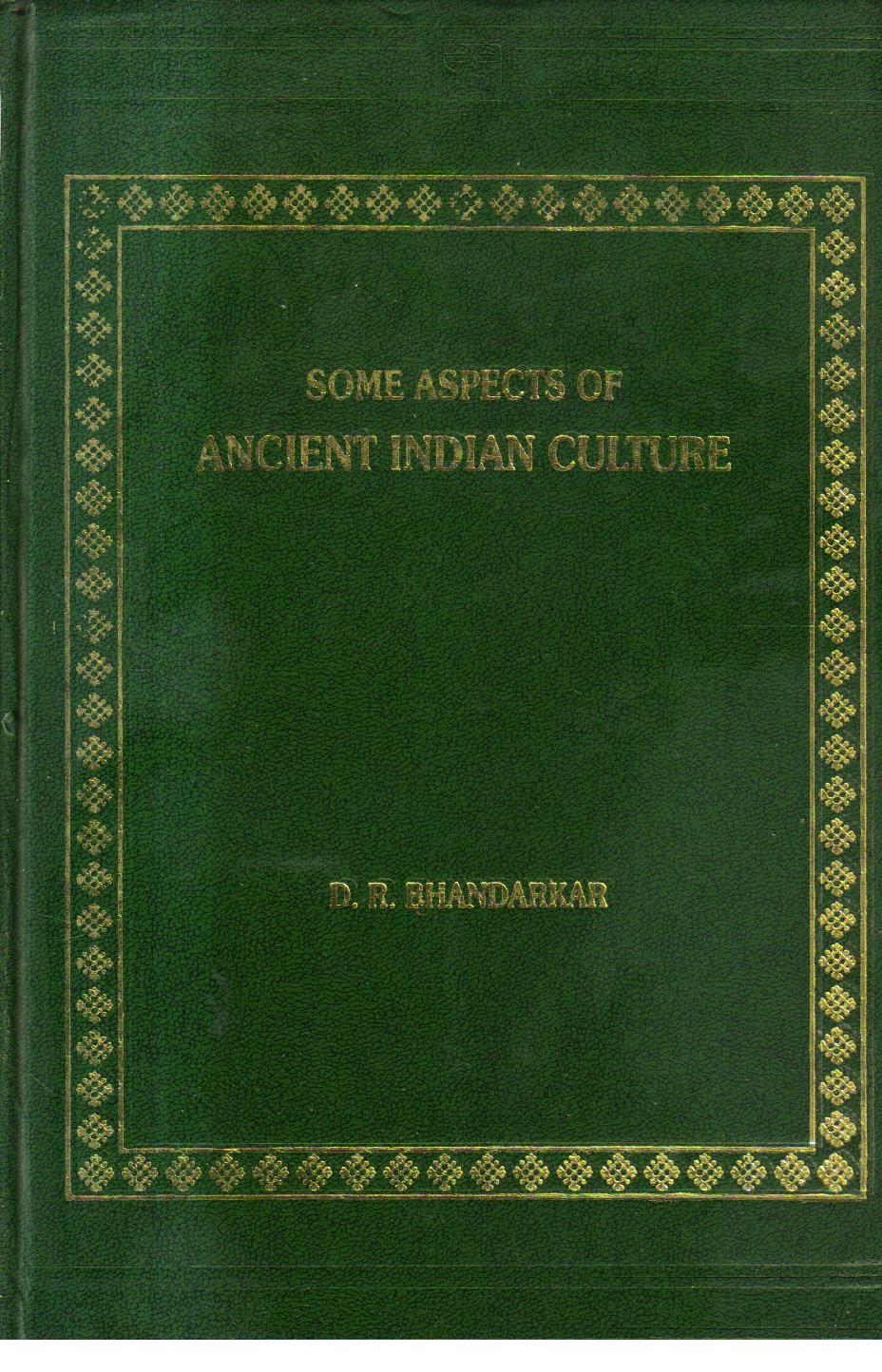
Some Aspects of Ancient Indian Culture.
Some Aspects of Ancient Indian Culture.
ook Details
• Publisher: Asian Educational Services
• Language: English
• Published Year: 1989
• Pages: 87
• Dimensions: 25 x 16 cm
• ISBN: 8120604571
• Book Condition: Used – Good
• Condition Note: Book is in good condition
• Availability: In Stock
About the Book
Asoka by D. R. Bhandarkar presents a concise yet informative study of Emperor Ashoka, one of the most remarkable rulers of ancient India and a prominent figure of the Mauryan Empire. The book explores Ashoka’s life, his rise to power, and his transformation after the Kalinga War, which led him to adopt the principles of peace and moral governance.
The author discusses Ashoka’s policies of administration, his promotion of the Buddhist ethical code known as Dhamma, and his efforts to encourage harmony, tolerance, and welfare among his subjects. The book also highlights Ashoka’s inscriptions and edicts, which provide valuable historical evidence about governance, religion, and society during the Mauryan period.
Through historical analysis and reference to archaeological findings, the work presents a clear picture of Ashoka’s role in shaping the political and cultural history of India. It also explains how his ideals of non-violence, justice, and ethical rule influenced later generations.
Asoka serves as a useful introduction for readers interested in ancient Indian history, the Mauryan Empire, and the enduring legacy of one of India’s most respected emperors.
Original: $4.79
-70%$4.79
$1.44Product Information
Product Information
Shipping & Returns
Shipping & Returns
Description
ook Details
• Publisher: Asian Educational Services
• Language: English
• Published Year: 1989
• Pages: 87
• Dimensions: 25 x 16 cm
• ISBN: 8120604571
• Book Condition: Used – Good
• Condition Note: Book is in good condition
• Availability: In Stock
About the Book
Asoka by D. R. Bhandarkar presents a concise yet informative study of Emperor Ashoka, one of the most remarkable rulers of ancient India and a prominent figure of the Mauryan Empire. The book explores Ashoka’s life, his rise to power, and his transformation after the Kalinga War, which led him to adopt the principles of peace and moral governance.
The author discusses Ashoka’s policies of administration, his promotion of the Buddhist ethical code known as Dhamma, and his efforts to encourage harmony, tolerance, and welfare among his subjects. The book also highlights Ashoka’s inscriptions and edicts, which provide valuable historical evidence about governance, religion, and society during the Mauryan period.
Through historical analysis and reference to archaeological findings, the work presents a clear picture of Ashoka’s role in shaping the political and cultural history of India. It also explains how his ideals of non-violence, justice, and ethical rule influenced later generations.
Asoka serves as a useful introduction for readers interested in ancient Indian history, the Mauryan Empire, and the enduring legacy of one of India’s most respected emperors.