Tagore, Elmhirst & The Sriniketan Legacy (English Version)
Book Details
• Publisher: Rohini Nandan
• Author: Professor Mahua Das
• Language: English
• Pages: 144
• Binding: Hardcover
• ISBN: 9789388866712
• Category: History / Cultural Studies
About the Book
Tagore, Elmhirst & The Sriniketan Legacy by Professor Mahua Das is a thoughtfully researched and insightful work that explores the visionary partnership between Rabindranath Tagore and Leonard Elmhirst, which led to the landmark creation of the Sriniketan rural reconstruction initiative. The book sheds light on the historical circumstances, philosophical inspirations, and practical innovations that shaped one of India’s most influential rural development movements.
Through archival study, analytical reflection, and historical interpretation, the book presents how Tagore’s holistic educational philosophy merged with Elmhirst’s scientific and developmental expertise, resulting in transformative experiments in sustainable agriculture, education, community empowerment, and rural livelihood improvement.
Rich in academic value, narrative clarity, and contextual depth, this work contributes meaningfully to the fields of Tagore studies, rural development, institutional history, education research, and cultural scholarship.
With 144 pages in a durable hardcover format, the book is ideal for researchers, scholars, students, educators, cultural historians, development practitioners, and readers interested in Tagore’s legacy and sustainable community models.
Product Information
Product Information
Shipping & Returns
Shipping & Returns
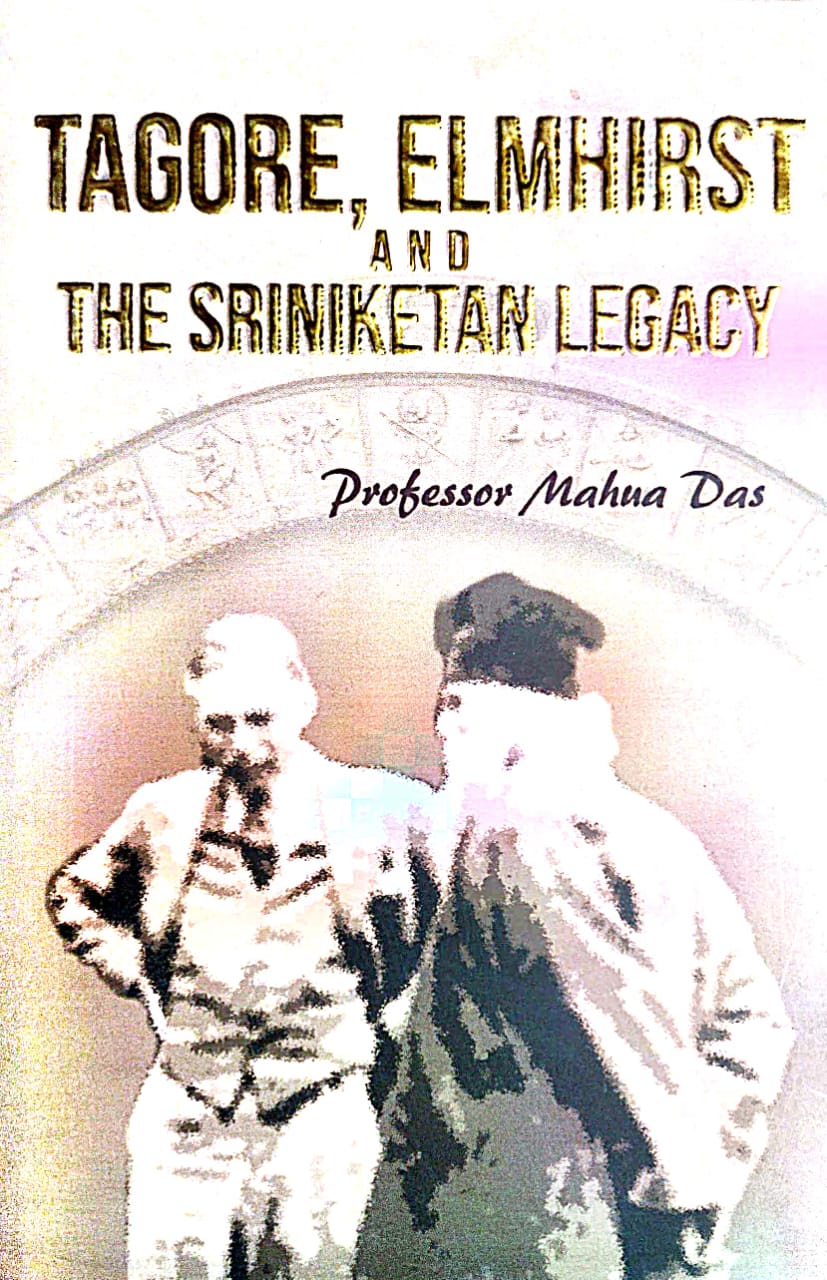
Tagore, Elmhirst & The Sriniketan Legacy (English Version)
Tagore, Elmhirst & The Sriniketan Legacy (English Version)
Book Details
• Publisher: Rohini Nandan
• Author: Professor Mahua Das
• Language: English
• Pages: 144
• Binding: Hardcover
• ISBN: 9789388866712
• Category: History / Cultural Studies
About the Book
Tagore, Elmhirst & The Sriniketan Legacy by Professor Mahua Das is a thoughtfully researched and insightful work that explores the visionary partnership between Rabindranath Tagore and Leonard Elmhirst, which led to the landmark creation of the Sriniketan rural reconstruction initiative. The book sheds light on the historical circumstances, philosophical inspirations, and practical innovations that shaped one of India’s most influential rural development movements.
Through archival study, analytical reflection, and historical interpretation, the book presents how Tagore’s holistic educational philosophy merged with Elmhirst’s scientific and developmental expertise, resulting in transformative experiments in sustainable agriculture, education, community empowerment, and rural livelihood improvement.
Rich in academic value, narrative clarity, and contextual depth, this work contributes meaningfully to the fields of Tagore studies, rural development, institutional history, education research, and cultural scholarship.
With 144 pages in a durable hardcover format, the book is ideal for researchers, scholars, students, educators, cultural historians, development practitioners, and readers interested in Tagore’s legacy and sustainable community models.
Original: $6.39
-70%$6.39
$1.92Product Information
Product Information
Shipping & Returns
Shipping & Returns
Description
Book Details
• Publisher: Rohini Nandan
• Author: Professor Mahua Das
• Language: English
• Pages: 144
• Binding: Hardcover
• ISBN: 9789388866712
• Category: History / Cultural Studies
About the Book
Tagore, Elmhirst & The Sriniketan Legacy by Professor Mahua Das is a thoughtfully researched and insightful work that explores the visionary partnership between Rabindranath Tagore and Leonard Elmhirst, which led to the landmark creation of the Sriniketan rural reconstruction initiative. The book sheds light on the historical circumstances, philosophical inspirations, and practical innovations that shaped one of India’s most influential rural development movements.
Through archival study, analytical reflection, and historical interpretation, the book presents how Tagore’s holistic educational philosophy merged with Elmhirst’s scientific and developmental expertise, resulting in transformative experiments in sustainable agriculture, education, community empowerment, and rural livelihood improvement.
Rich in academic value, narrative clarity, and contextual depth, this work contributes meaningfully to the fields of Tagore studies, rural development, institutional history, education research, and cultural scholarship.
With 144 pages in a durable hardcover format, the book is ideal for researchers, scholars, students, educators, cultural historians, development practitioners, and readers interested in Tagore’s legacy and sustainable community models.