Nim Hawa (Bengali Version)
Book Details:
-
Author Name: Anirban Bhattacharya
-
Publisher: Deep Prakashan
-
Binding: Hardcover
-
Language: Bengali
About the Book:
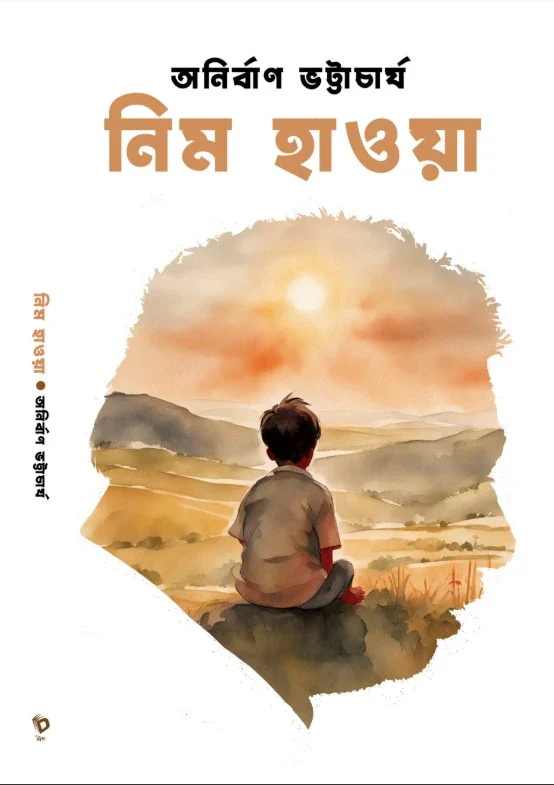
Nim Hawa (Bengali Version) is a deeply nostalgic and evocative narrative that traces a journey—perhaps a return journey—into memory. At its heart lies the restless search for a personal El Dorado, a place that once felt as simple and essential as water itself.
That place is Barbil, a small mining town in Keonjhar district, Odisha. Through vivid recollection, the author recreates the Barbil of the late 1980s and early 1990s—a town where rugged red earth and lush green landscapes coexisted in quiet harmony. A main road in front of the house, a railway line running alongside it, tribal markets beyond, eucalyptus trees on the slopes, Bengali households scattered around, ponds and fields behind the house, Thakurani hills in the distance, the sound of madal drums at dusk, and jackals descending from the hills on winter nights—these images build a living, breathing world.
The book captures the textures of an era: black-and-white television sets, Chitrahaar evenings, the first time hearing Kumar Sanu, the magic of Maradona, Gold Spot bottles, and the proper nouns of a small-town childhood. It is not merely a memoir but a mosaic of memory—intimate, sensory, and tender.
Nim Hawa is a celebration of lost time, place, and innocence—a lyrical reflection on growing up, belonging, and the quiet ache of remembering.
Product Information
Product Information
Shipping & Returns
Shipping & Returns
Nim Hawa (Bengali Version)
Nim Hawa (Bengali Version)
Book Details:
-
Author Name: Anirban Bhattacharya
-
Publisher: Deep Prakashan
-
Binding: Hardcover
-
Language: Bengali
About the Book:
Nim Hawa (Bengali Version) is a deeply nostalgic and evocative narrative that traces a journey—perhaps a return journey—into memory. At its heart lies the restless search for a personal El Dorado, a place that once felt as simple and essential as water itself.
That place is Barbil, a small mining town in Keonjhar district, Odisha. Through vivid recollection, the author recreates the Barbil of the late 1980s and early 1990s—a town where rugged red earth and lush green landscapes coexisted in quiet harmony. A main road in front of the house, a railway line running alongside it, tribal markets beyond, eucalyptus trees on the slopes, Bengali households scattered around, ponds and fields behind the house, Thakurani hills in the distance, the sound of madal drums at dusk, and jackals descending from the hills on winter nights—these images build a living, breathing world.
The book captures the textures of an era: black-and-white television sets, Chitrahaar evenings, the first time hearing Kumar Sanu, the magic of Maradona, Gold Spot bottles, and the proper nouns of a small-town childhood. It is not merely a memoir but a mosaic of memory—intimate, sensory, and tender.
Nim Hawa is a celebration of lost time, place, and innocence—a lyrical reflection on growing up, belonging, and the quiet ache of remembering.
Original: $2.13
-70%$2.13
$0.64Product Information
Product Information
Shipping & Returns
Shipping & Returns
Description
Book Details:
-
Author Name: Anirban Bhattacharya
-
Publisher: Deep Prakashan
-
Binding: Hardcover
-
Language: Bengali
About the Book:
Nim Hawa (Bengali Version) is a deeply nostalgic and evocative narrative that traces a journey—perhaps a return journey—into memory. At its heart lies the restless search for a personal El Dorado, a place that once felt as simple and essential as water itself.
That place is Barbil, a small mining town in Keonjhar district, Odisha. Through vivid recollection, the author recreates the Barbil of the late 1980s and early 1990s—a town where rugged red earth and lush green landscapes coexisted in quiet harmony. A main road in front of the house, a railway line running alongside it, tribal markets beyond, eucalyptus trees on the slopes, Bengali households scattered around, ponds and fields behind the house, Thakurani hills in the distance, the sound of madal drums at dusk, and jackals descending from the hills on winter nights—these images build a living, breathing world.
The book captures the textures of an era: black-and-white television sets, Chitrahaar evenings, the first time hearing Kumar Sanu, the magic of Maradona, Gold Spot bottles, and the proper nouns of a small-town childhood. It is not merely a memoir but a mosaic of memory—intimate, sensory, and tender.
Nim Hawa is a celebration of lost time, place, and innocence—a lyrical reflection on growing up, belonging, and the quiet ache of remembering.