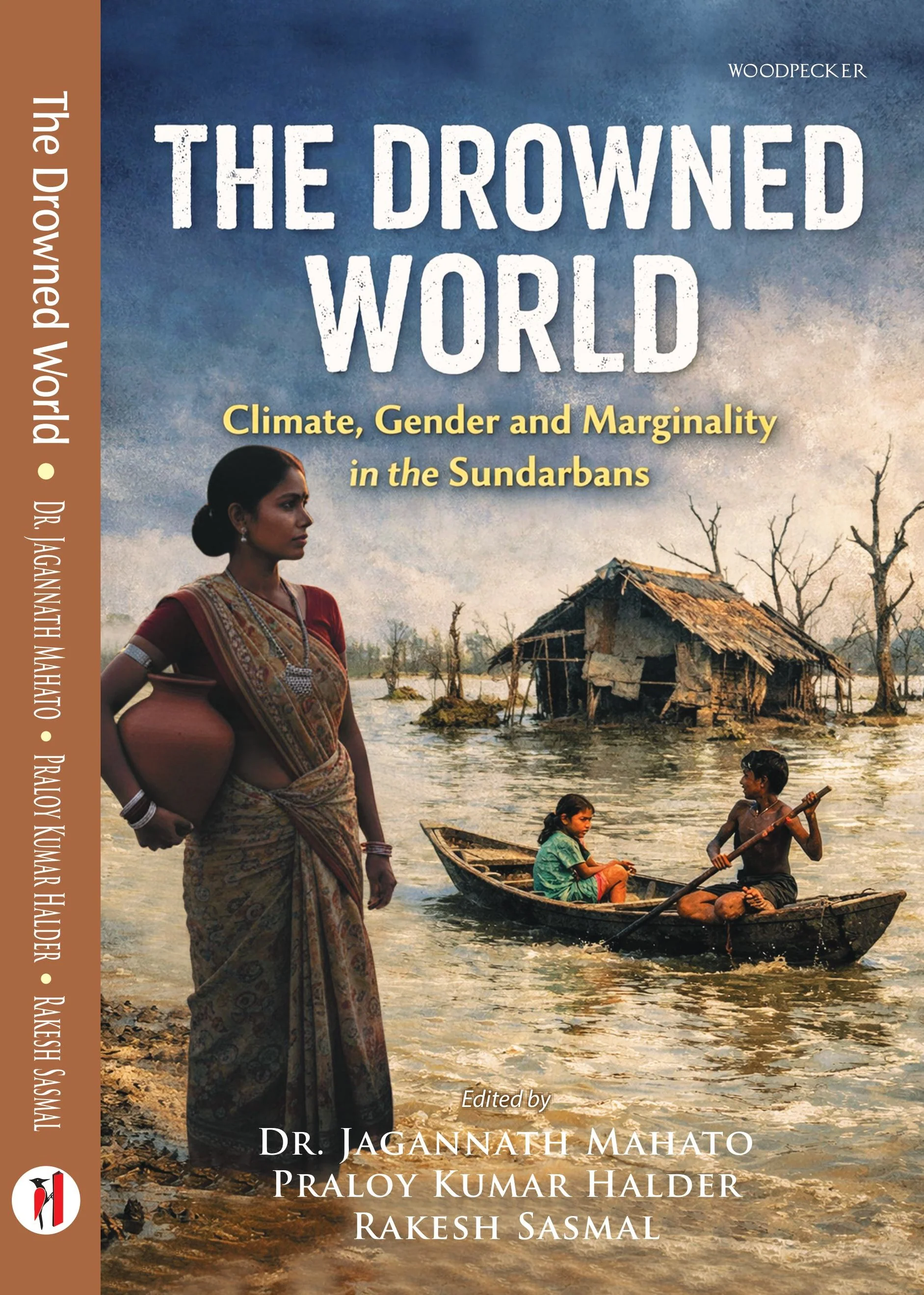
The Drowned World: Climate, Gender and Marginality in the Sundarbans (English Version)
Product Details:
• Authors: Dr. Jagannath Mahato, Praloy Kumar Halder, Rakesh Sasmal
• Publisher: Woodpecker
• Language: English
• ISBN: 9789347308550
About the Book:
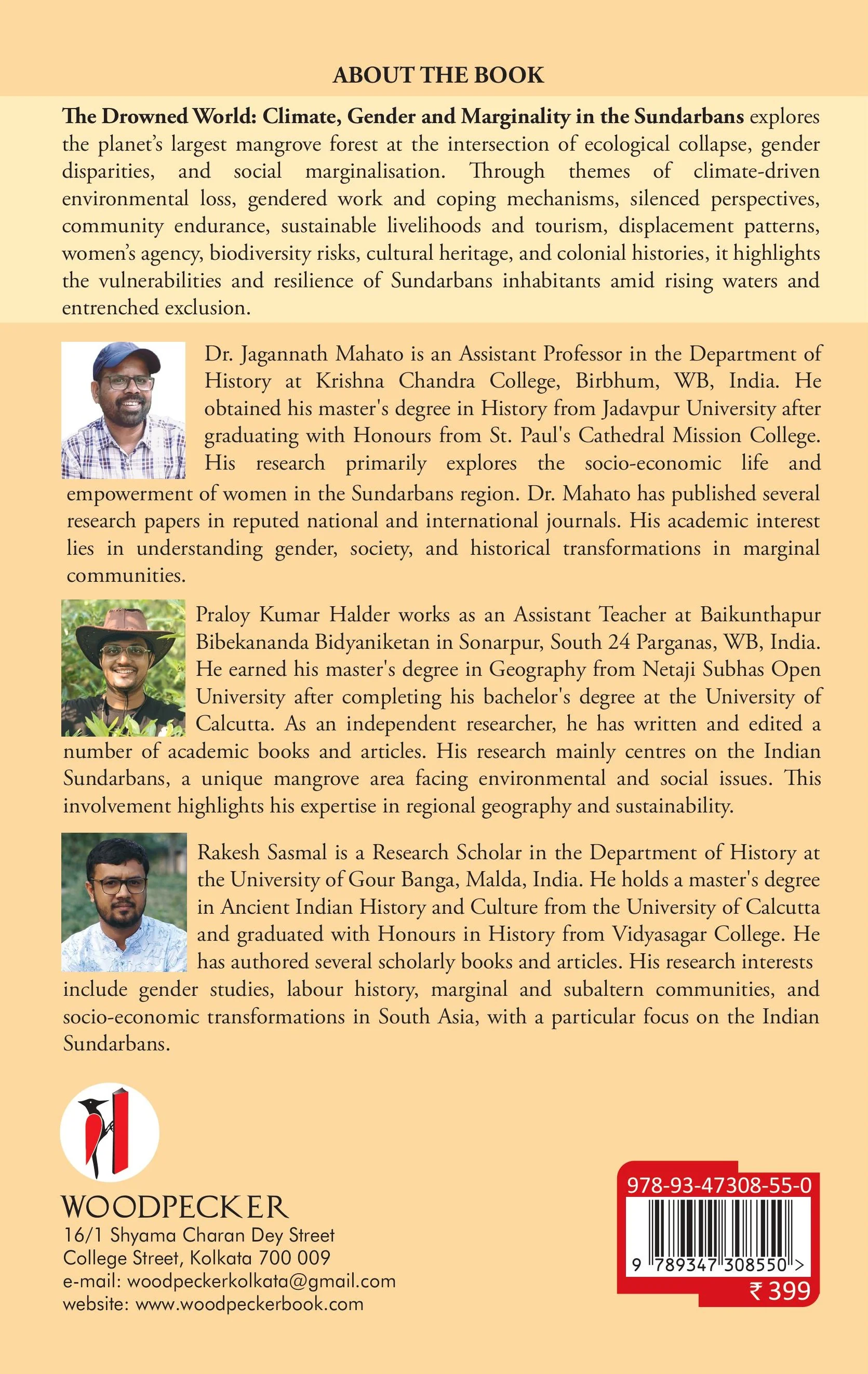
The Drowned World: Climate, Gender, and Marginality in the Sundarbans explores the complex intersection of ecological collapse, gender disparities, and social marginalization in the Sundarbans, the world's largest mangrove forest. This book highlights the vulnerability of the region's inhabitants amidst rising water levels, shifting climate patterns, and entrenched social exclusion.
Through a detailed examination of climate-driven environmental loss, gendered labor, coping mechanisms, and the voices of marginalized communities, this work sheds light on the daily struggles and resilience of Sundarbans residents. The authors examine topics such as sustainable livelihoods, tourism, displacement, women's agency, biodiversity risks, and cultural heritage, all within the context of the Sundarbans' colonial history and ongoing environmental challenges.
The book offers a multidimensional view of the Sundarbans, with insights into how the people of this region, particularly women, navigate the complexities of ecological, social, and economic challenges. It is an important academic contribution that highlights the intricate relationship between the environment, gender, and marginality, providing a thorough understanding of the socio-economic dynamics in one of India’s most vulnerable regions.
Product Information
Product Information
Shipping & Returns
Shipping & Returns
The Drowned World: Climate, Gender and Marginality in the Sundarbans (English Version)
The Drowned World: Climate, Gender and Marginality in the Sundarbans (English Version)
Product Details:
• Authors: Dr. Jagannath Mahato, Praloy Kumar Halder, Rakesh Sasmal
• Publisher: Woodpecker
• Language: English
• ISBN: 9789347308550
About the Book:
The Drowned World: Climate, Gender, and Marginality in the Sundarbans explores the complex intersection of ecological collapse, gender disparities, and social marginalization in the Sundarbans, the world's largest mangrove forest. This book highlights the vulnerability of the region's inhabitants amidst rising water levels, shifting climate patterns, and entrenched social exclusion.
Through a detailed examination of climate-driven environmental loss, gendered labor, coping mechanisms, and the voices of marginalized communities, this work sheds light on the daily struggles and resilience of Sundarbans residents. The authors examine topics such as sustainable livelihoods, tourism, displacement, women's agency, biodiversity risks, and cultural heritage, all within the context of the Sundarbans' colonial history and ongoing environmental challenges.
The book offers a multidimensional view of the Sundarbans, with insights into how the people of this region, particularly women, navigate the complexities of ecological, social, and economic challenges. It is an important academic contribution that highlights the intricate relationship between the environment, gender, and marginality, providing a thorough understanding of the socio-economic dynamics in one of India’s most vulnerable regions.
Product Information
Product Information
Shipping & Returns
Shipping & Returns
Description
Product Details:
• Authors: Dr. Jagannath Mahato, Praloy Kumar Halder, Rakesh Sasmal
• Publisher: Woodpecker
• Language: English
• ISBN: 9789347308550
About the Book:
The Drowned World: Climate, Gender, and Marginality in the Sundarbans explores the complex intersection of ecological collapse, gender disparities, and social marginalization in the Sundarbans, the world's largest mangrove forest. This book highlights the vulnerability of the region's inhabitants amidst rising water levels, shifting climate patterns, and entrenched social exclusion.
Through a detailed examination of climate-driven environmental loss, gendered labor, coping mechanisms, and the voices of marginalized communities, this work sheds light on the daily struggles and resilience of Sundarbans residents. The authors examine topics such as sustainable livelihoods, tourism, displacement, women's agency, biodiversity risks, and cultural heritage, all within the context of the Sundarbans' colonial history and ongoing environmental challenges.
The book offers a multidimensional view of the Sundarbans, with insights into how the people of this region, particularly women, navigate the complexities of ecological, social, and economic challenges. It is an important academic contribution that highlights the intricate relationship between the environment, gender, and marginality, providing a thorough understanding of the socio-economic dynamics in one of India’s most vulnerable regions.